Thursday, 21 March 2019

Top 8 Best Logo Design & Branding Courses Online (Free & Paid)

Want to learn logo design online?

There’s certainly no shortage of logo design and branding courses, classes, training videos or tutorials online, making it difficult to choose what’s right for you.

To help this process, I’ve compiled the best logo courses online based on my experience as a brand designer and by asking other experts in the field.

When choosing your course, take into consideration the value, cost, length and content of each course, and the fact that some options are subscriptions, meaning you will get access to multiple courses and instructors.

Top 8 Logo Design & Branding Courses (Free & Paid)

These are the top free and paid logo courses online, with their cost and time required to complete the course/video.

Course Provider Cost (USD) Length
LogoCore $72-$320 (inc 65% off Adobe CC) 15-20 hours
Coursera 7 day free trial then $49/month 6 months (or less)
Udemy $10/course 10-15 hours
LinkedIn Learning 1 month free trial then $49/month 1-2 hours per video
Skillshare 2 months free trial then $10/month 30mins – 2hours per video
CreativeLive $39/month 3-5 hours per module
Futur $149 12 hours (2 hours per module)
Adobe on Udemy Free 8 hours


See here for the best free graphic design courses.

LogoCore Masterclass (includes 65% off Adobe Creative Cloud + 10% Discount)

LogoCore Masterclass

The LogoCore Masterclass is the most in-depth online logo course available, perfect for beginners and intermediate designers looking to learn logo design.

Master Adobe Illustrator, learn grid structures, how to vectorize a logo, how to present design work, create a styleguide, build a creative brief, get valuable feedback, animate logos and so much more. They also have a mentorship program.

Get an exclusive 10% discount with coupon code ‘JUST10’. Simply enter the coupon at checkout.

The best part? You get 65% off Adobe Creative Cloud.

» Learn More

$72-$320 | 15-20 hours

Coursera (Extensive 6 Month Design & Branding Course)

Coursera Design Course

If you’re wanting to a deeper dive into design fundamentals, typography, branding and logo design you should enroll in Coursera’s Graphic Design Specialization Course in association with California Institute of the Arts. The course goes over six months and costs $49 a month, and has a closing course ‘Brand a New Brand’ which puts all your new skills into practice.

» Learn More

7 day free trial, then $49/month | 6 Months

Logo Design Masterclass on Udemy

Logo Design Masterclass on Udemy

The Logo Design Masterclass on Udemy uses a hands-on approach to learning Adobe Illustrator and logo design as a whole.

This course contains 13 sections and 85 lectures, so it’s packed with value!

In addition to understanding the qualities of an effective logo, I also love that you learn about:

  • Working with clients and conducting research to give them the logo they desire
  • Formulating and sketching your logo ideas
  • Creating, editing, and finalizing your logo in Illustrator (There is a heavy focus on this)

» Learn More

$10 (Exclusive partner price – 90% off!) | 8-15 hours to complete

LinkedIn Learning (Formerly Lynda)

LinkedIn Learning - Von Glitschka Logo Course

There are two great teachers on LinkedIn Learning that I recommend you check out; Von Glitschka and Bill Gardner, both heavy-weights in the design industry.

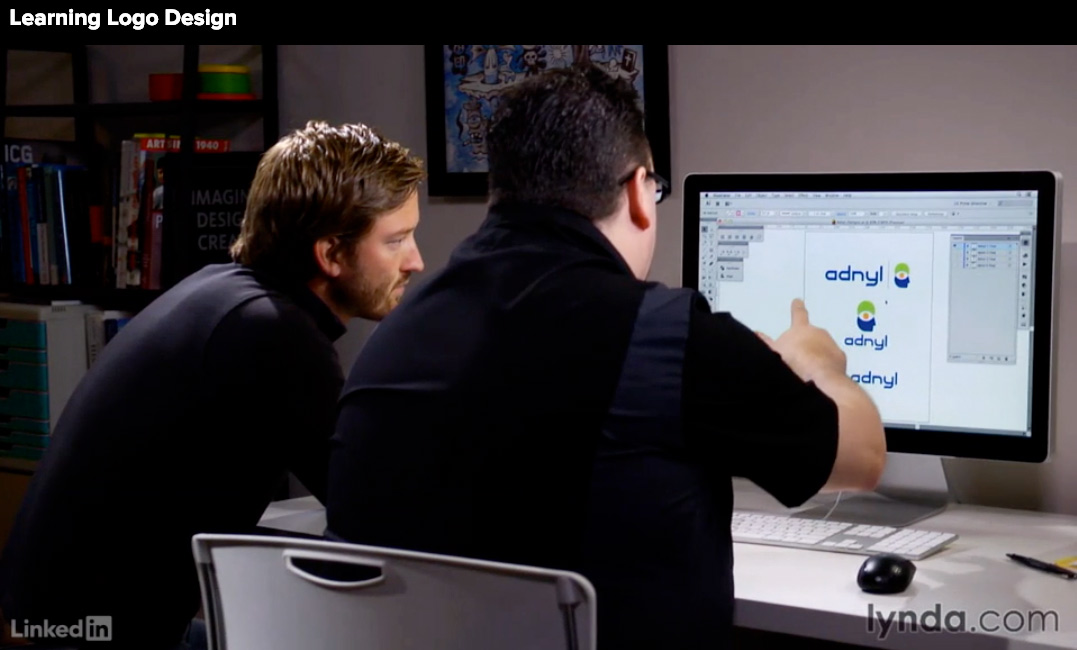
Von Glitschka (Learning Logo Design)

Von’s 2.5hr class ‘Learning Logo Design‘ is packed full of juicy tips, not just for creating logos but the actual business of design; determining scope, quoting, naming, crafting identities and brand systems, pitching your work, styleguides and much more. He also has 6 other classes available.

Bill Gardner (Logo Development Series)

Currently, Bill has 10+ tutorials on logo design, but I recommended to start on his ‘Logo Development‘ series which goes into the fundamentals of logo design. Bill actually goes into the of value of preparation and research before getting into the creative side of things, discovering the motivations behind a client’s decision to rebrand as well as competitor analysis. A higher level look at the logo design process.

» Learn More

$59/month with LinkedIn Premium | 1-2 hours per video

Skillshare

Aaron Draplin Logo Course

For a quick dip into logo design, Skillshare offer short classes on logo design. Although these classes are a great way to wet your toes, they don’t offer a holistic solution to learning brand design, but they are perfect for learning & refining particular skills. For an energy-packed class, be sure to watch Aaron Draplin’s logo design tutorials.

» Learn More

2 months free then $10-$20 month | 30 minutes to 2 hours per video

CreativeLive

CreativeLive Branding Courses

CreativeLive offer a number of logo design & branding tutorials from a variety of different teachers. Like Skillshare, these vary in scope and quality and are shorter in length.

If you’re a business owner (non-designer) and are looking to learn the basics for your own “DIY logo”, check out this class on logo design for your small business.

» Learn More 

$39/monthly pass or $25/month with a yearly subscription | 3-5 hours per module

Futur – Logo Design & Construction Course
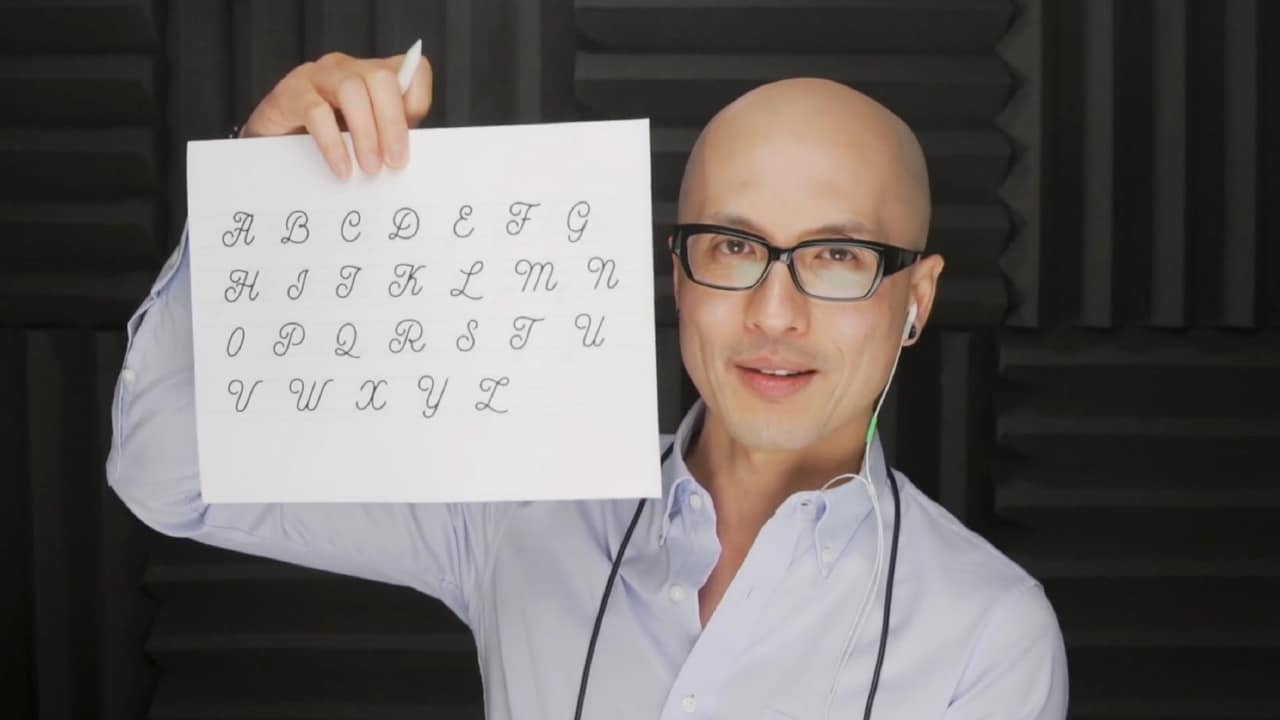
Logo Course with Futur

This Logo Design & Construction course from The Futur, teaches you the creative process of logo design and “best practices from design professionals who charge $10k+”.

There are 6 modules that explore the different types of logo design; letter marks, monoline logos, word mark logos, symbols, combination marks and crests. The Futur also have a number of free logo design videos on YouTube.

» Learn More

$149 | 2 hours per module (x6)

Top Free Logo Design Courses Online

Want to know how to learn logo design for free? Here are the best free course to learn logo design online.

Professional Logo Design in Adobe Illustrator
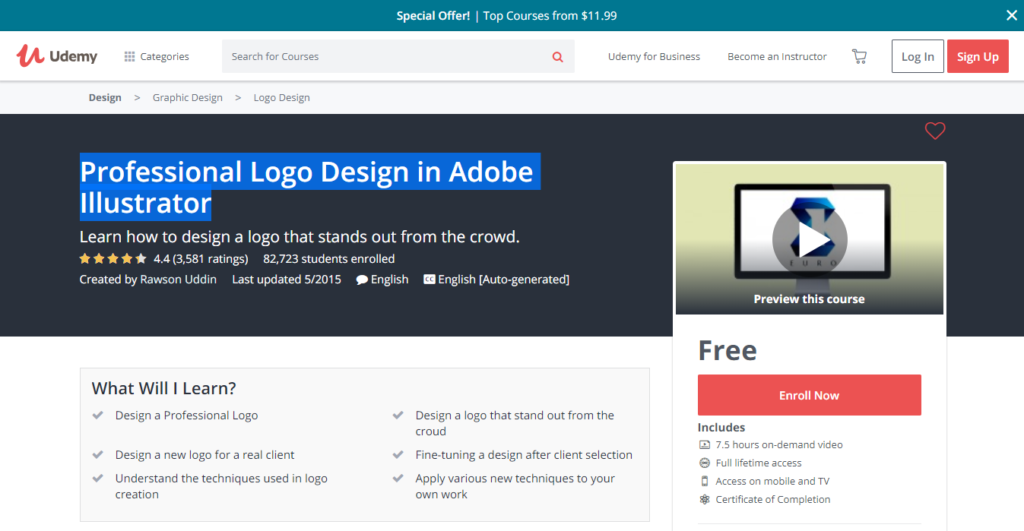
Udemy - Free Graphic Design Course Logo Design in Adobe Illustrator

In Professional Logo Design in Adobe Illustrator, created by Rawson Uddin, students are given access to over seven hours of on-demand video courses, as well as full lifetime access and receive a certificate of completion at the end of the course. The only recommended requirement is to have a basic knowledge of Adobe Illustrator as the course is an advanced lesson.

Throughout the course, you will learn about a plethora of topics that can help you design your own logo or maybe even start a logo design business on the side. These topics include:

  • How to choose the right typeface
  • Using simple shapes in a design
  • Designing with negative space
  • Choosing colors for the logo
  • Adding other effects to your logo design

Along with the course, you can download a working file to practice with as you go through the course. All in all, the Professional Logo Design in Adobe Illustrator provides a robust class for those looking to start designing logos.

» Learn More

Free | 8 hours

See here for more top free logo design courses.

How to choose the best Logo Design Course for you

Choosing to take an online course to learn logo design or the business of design is a very honorable thing to do. Like you, I understand that time, money and many other factors can keep you from picking one course to take over another.

I hope that the courses showcased here can give you some idea of some of the best paid & free logo design courses available online today.

Top 8 Logo Design & Branding Courses (Free & Paid)

Here are the best courses summarised again.

Course Provider Cost (USD) Length
LogoCore $72-$320 (inc 65% off Adobe CC) 15-20 hours
Coursera 7 day free trial then $49/month 6 months (or less)
Udemy $10/course 10-15 hours
LinkedIn Learning 1 month free trial then $49/month 1-2 hours per video
Skillshare 2 months free trial then $10/month 30mins – 2hours per video
CreativeLive $39/month 3-5 hours per module
Futur $149 12 hours (2 hours per module)
Adobe on Udemy Free 8 hours


See

Have you taken an online branding course? Let us know more in the comments.

Tuesday, 19 March 2019

How I Get 1000 Email Subscribers a Week

If you’re wanting to start a newsletter, get into email marketing, or simply just want more email subscribers, listen up!

This is the method I use to get 1000 email subscribers a week, using lead magnets on my website.

To get started:

  1. Get traffic to your website with great content & marketing
  2. Capture emails with a lead magnet popup, such as my free logo ebook

For part two, I recommend using the conversion optimisation software, OptinMonster. I use Aweber for sending my emails.

OptinMonster FLASH SALE (2 days only)

Get 35% off between March 19-March 20, 11:59PM EST. Use coupon ‘LUCKY35’.

Let me know if you have any questions!

Wednesday, 13 March 2019

How to Optimize Your Content for Voice Search

This article was contributed by Ellan Dineen.

Research shows that the voice commerce sector was worth $1.8 billion in the US and $200 million in the UK during 2017. There’s no doubt that developments in technology and the rise of voice assisted devices around the world is changing the way content is managed and how users utilize the Internet.

Voice search technology has a lot of advantages and understanding this technology can really give you an edge. This is especially true when it comes to making sure your content appears in voice searches so that your website can obtain more traffic and leads.

But, some businesses are still only using techniques designed for text searches, and this means they aren’t reaching their full potential are at a disadvantage to their competitors.

If you’re looking to optimize your content for voice search, here are our top tips for getting to the top of the SERPs.

Important Voice Search Statistics

Are you still having trouble believing in the future of the dominance that voice search will have over the search engines? Is this, as a result, preventing you from dedicating your business’s resources to the development of this strategy in your overall marketing plan?

Well, what better way to understand the effect voice search is having consumers than reviewing data? Below we have gathered a list of the most important statistics:

  • Instead of typing, 71% of people would prefer using a voice assistant for searching on the web
  • 50% of all searches will be voice searches by 2020
  • Some experts predict that 30% of web browsing sessions will be done without a screen by 2020
  • The voice recognition market will be a $601 million industry by 2019
  • Voice search queries typically fall into four categories – 27% personal assistant, 30% general information, 21% entertainment & fun and 22% local information.
  • Google says that 72% of voice-activated speaker owners use the devices as part of their daily routine
  • 5% of consumers use voice shopping, but that number could reach 50% by 2022

Now that you are aware of how voice search makes lives easier for consumers, let’s go on to find out exactly what Google voice search is.

What is Google Voice Search?

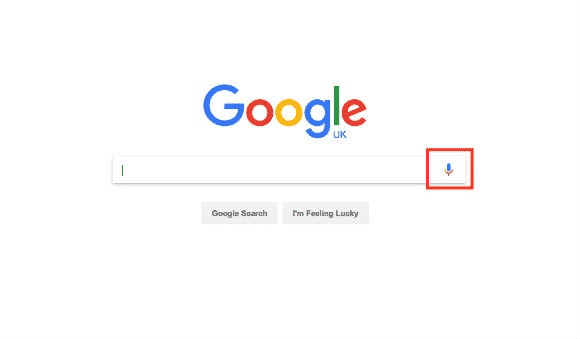
Rather than typing, Google voice search is a feature that allows users to search the web by using their voice to speak their search query.

Google Voice Search Icon

It is speech recognition that Google voice search is based on. It processes and transcribes human speech into text.

It then connects to its search engine to find relevant information.

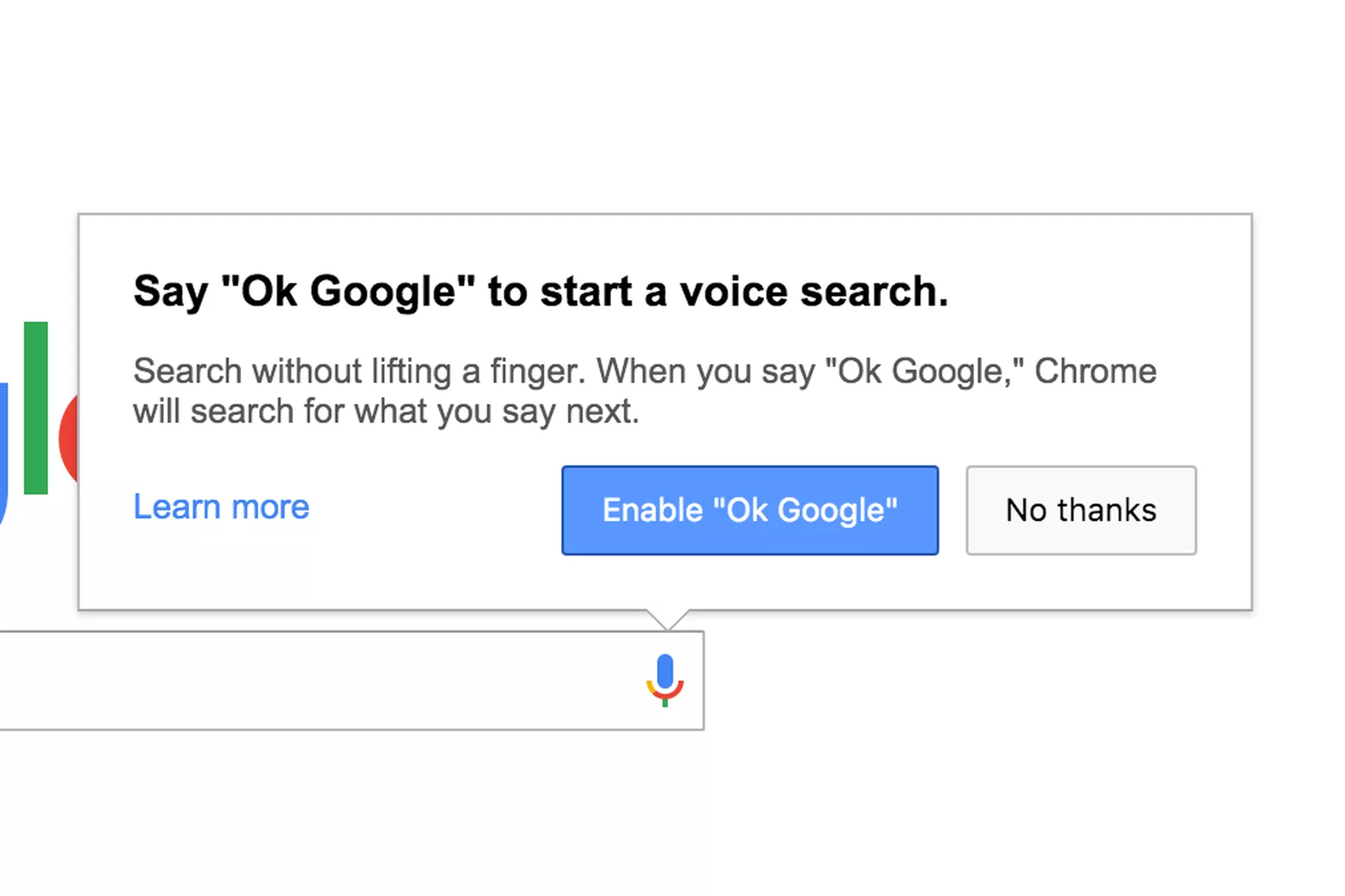
Most smartphones and other devices are able to implement this new technology. It can be done by tapping the microphone on the Google search page or by a hands-free voice command by first saying the phrase “OK, Google.”

Google Voice Search

Think like a customer

Text VS Voice Searching

A lot of the time, when businesses are creating content, they will try and appeal to their customers using a “marketing voice”. In fact, it can be pretty difficult for a lot of marketers to avoid this. It’s something they do automatically.

But, if you’re trying to optimize your content for voice searches, it’s actually more important than ever to use a natural tone.

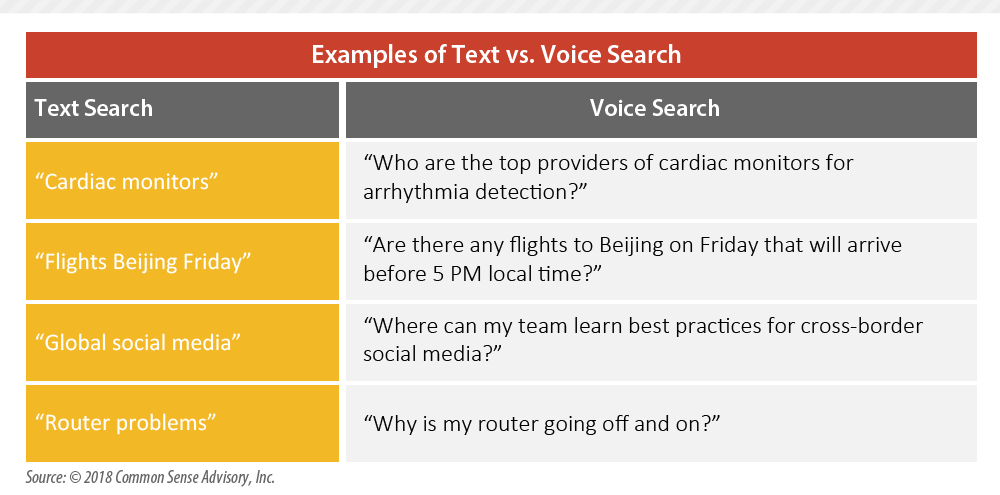
When customers use voice searches, they tend to ask questions. It’s a lot more conversational. And you need to think about how they would phrase things.

Some more examples of this would be:

  • Text search: “Pizza delivery near me”
  • Voice search: “Which pizza restaurants deliver to me?”
  • Text search: “Supermarket opening hours”
  • Voice search: “What time does the supermarket close?”
  • Text search: “Closest train station”
  • Voice search: “Where is the nearest train station?”

As you create content for voice searches, you should try and include long-tail keywords that will answer certain questions, since the majority of consumers do not use short, choppy keywords.

These can be incorporated into your web content.

Use FAQ content

Search Voice

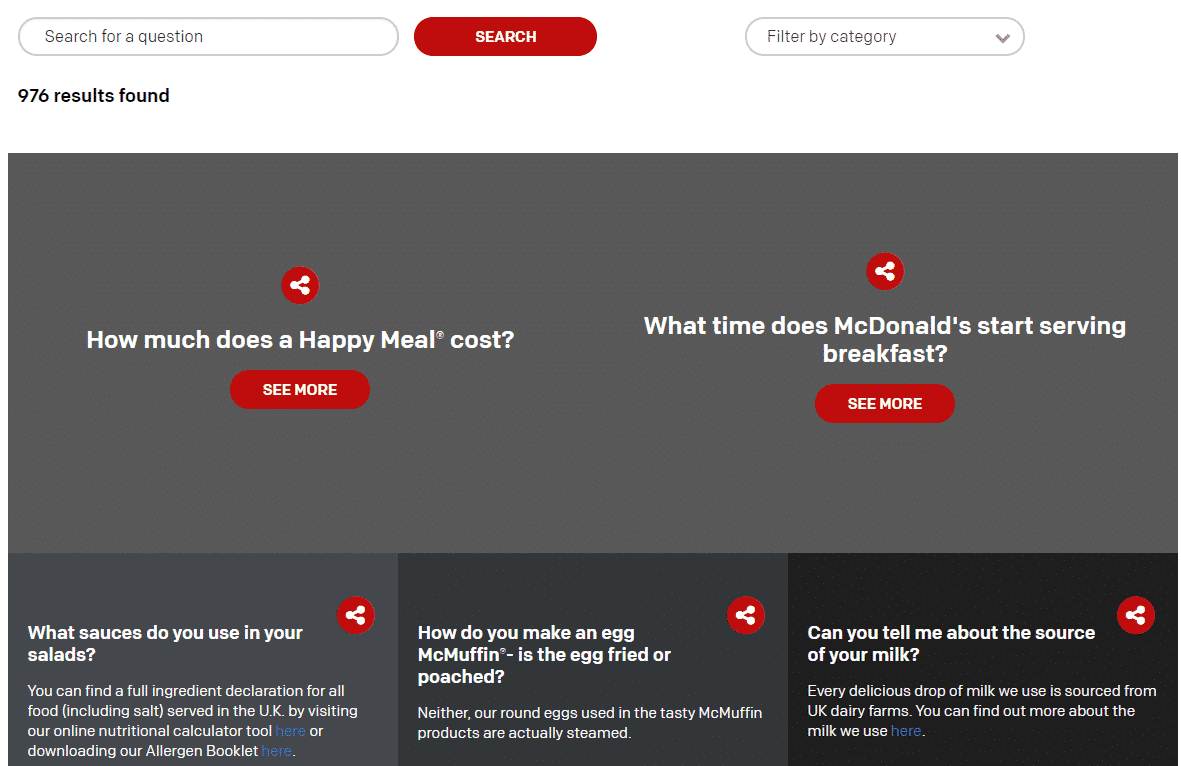
Voice searches tend to be for specific questions. Because of this, expanding or adjusting your FAQ page can be one of the most efficient ways of making yourself more visible in searches.

Begin by asking yourself, what are the most common questions your customers will be asking about your business?

If you’re not sure which questions are relevant, think about what they ask you over the phone or in person. If this means you need to speak to your customer service staff for a better insight on the most common queries.

Then, you can begin to structure your FAQ page around these questions, remembering to tailor your content around what people are likely to search for.

It’s important to note, however, that you don’t necessarily have to stick to a rigid FAQ structure when applying this: just using the basic format to optimize your page in searches.

Create relevant blog posts

Voice Search on Social

Using your FAQ page to answer relevant questions can really boost your web traffic through web searches. However, this alone is unlikely to be enough to answer all the queries your customers will have.

A lot of companies spend all their efforts on their FAQ page. And while this is beneficial, creating dedicated blog posts to answer these queries can help to increase your searchability.

Once you have created a list of relevant search terms, you can come up with blog topics that will include those terms. Not only does this increase the chances of your web page coming up in Google searches, it also adds value for the reader.

Make it mobile-friendly

google voice queries

The most commonly used voice search technology is through mobile devices. Technology like Siri and Alexa have transformed the way customers search the web.

In fact, it’s estimated that, at the moment, 20% of all mobile searches are through voice. And by 2020, it’s predicted that this figure will rise to 50%.

Therefore, it’s important to consider that, if most voice searches are being made through mobiles, there will be some differences in the types of searches. You need to consider the context.

For instance, mobile users are much more likely to make searches when they are out, rather than while they are at home. This will increase the chances of “near me” type searches. It also means that the topics they are searching need to be acceptable to say out loud in public.

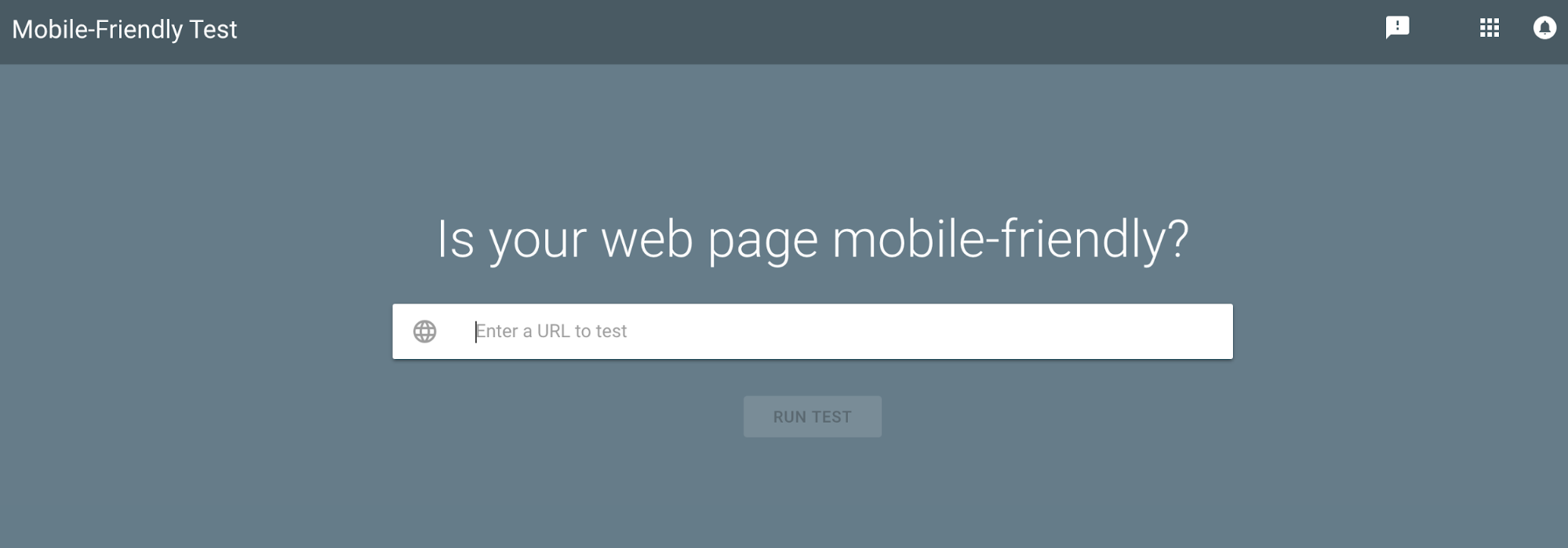
In addition to this, you need to ensure that the content itself is mobile-friendly. There are various online tools available to do this – WordPress, in particular, has excellent tools to ensure your content is mobile-friendly. You could also use Google’s Mobile-Friendly Test.

Mobile Test

If you don’t want to use a tool, there are still ways to manually check the layout of your content and make sure it’s suitable for your audience to view on mobile devices.

Some of the basic steps you can take to do this are:

  • Use shorter paragraphs and check that there’s enough white space
  • Break down your blog posts and web content using subheadings, lists, and bullet points
  • Make sure all your images are optimized for mobile
  • Keep the titles of any blog posts short and interesting
  • Ensure that the writing is of a high quality. You can choose to outsource parts of this if you feel your writing skills aren’t strong enough

Lastly, when you’re optimizing your mobile content for SEO purposes, you need to adjust your keywords to match. Remember: when users search using voice search on mobile devices, they tend to use different keywords than they would in traditional, written web searches.

Make sure your webpage is SEO optimized

Google business listing

Optimizing your web content for voice searches is different to optimizing it for text searches. However, it’s still just as important that you use SEO properly.

Using the right language and making sure that it’s structured properly is essential if you want the data to be picked up by search engines. Bear in mind, that certain information will always be needed and should be available immediately.

Most importantly, results need to show your contact information, hours of operation, directions, and other information. You can help to make this information more likely to appear in search results by doing the following:

  • Use keywords that will pull up your content in featured snippets on Google. Most of these snippets come being in the top ten search results
  • Use analytical tools to find the most relevant keywords for your customer base
  • Look at the related search terms in search engine results. Then try and answer those questions in your content
  • Ensure that your location and contact information is clear and easy to find. It should be included on every page. This is very good for increasing your results in local searches
  • Include high quality, SEO optimized images to make your site more appealing visually

Avoid Buzzwords

One of the biggest differences you’ll find between voice and text search is that voice searches tend to be more conversational. They are also slightly longer and use simpler language.

This means that you need to make sure that, firstly, your search terms match this change. You should aim to use a natural tone, and avoid jargon and buzzwords, as customers don’t use these in voice searches.

Additionally, you should focus on providing as much value to the customer possible. Focus on keeping the information as simple as possible. You should offer them something of value, which is useful to them.

This could be by providing something entertaining or informative: either way, they need to feel like they’re getting something from you that they can’t get elsewhere.

In order for your web content to be as appealing as possible, you also need to consider whether it’s visually appealing. Keeping in line with the most recent design and branding trends can help you to achieve this.

Implement Page Speed Optimization

Just like having a flawless user experience is a critical ranking factor for Google, so is page speed.

In fact, pages appearing as a voice search result are more than 50% faster than average pages. So if you want your content to rank for voice search in Google, you must ensure that the page it is published on is optimized for speed.

Google Page Speed

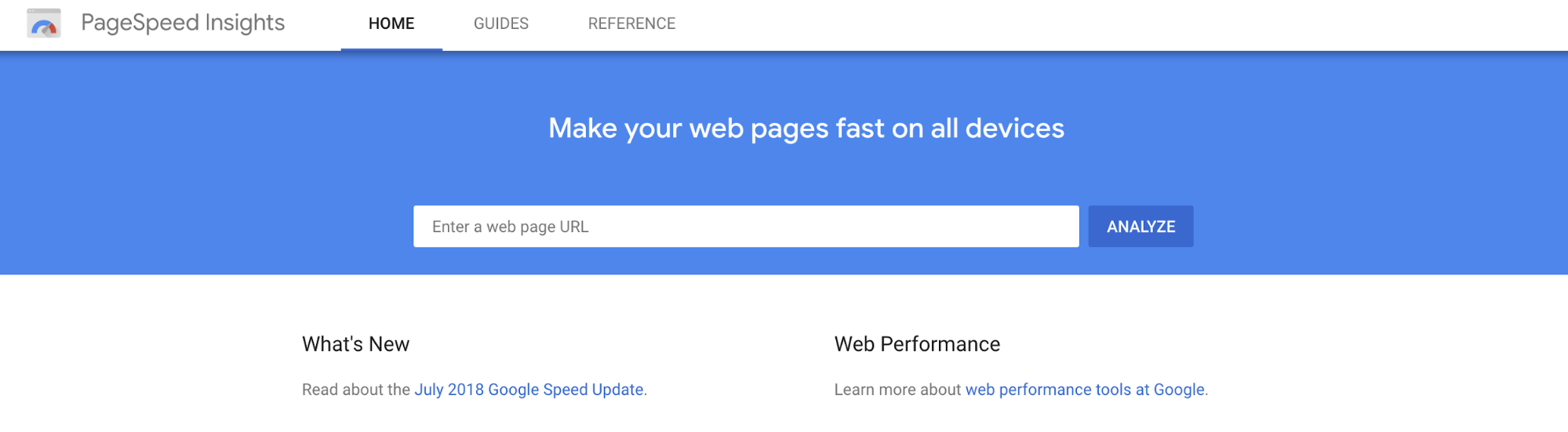
We recommend checking the speed of your pages with a free tool such as PageSpeed Insights.

Write Content that is Easy to Read

It may seem more logical to “sound” intelligent in the content you produce by writing essay type content, thinking that it will impress your website visitors.

But Google cares about the level of readability that is delivered to its users. It wants its users to be able to read and understand all of the content that they click on.

The average Google voice search result has a 9th-grade reading level, reports Backlinko.

If you want to compete with these type of search results – run your content through a tool like The Hemingway App. All you need to do is paste your content on to the app, and it will show its readability level and provide you with helpful tips on how to reduce this level. And it’s free to use – perfect.

Hemmingway

Conclusion

Make sure your company does not get left behind by refusing to implement this new technology into your marketing strategy. Dedicating the necessary resources and budget to optimizing your content for voice search will make sure your competitors do not race past you in the SERPs.

If your page is optimized well, your content is easy-to-read, your website is mobile friendly and you have created relevant blog posts, voice search is a tool that can help you to attract more web traffic and sales. Ultimately, it can help you achieve more success and increase your bottom line.

By following these tips, you can help make your content as easy to find as possible by appearing high in the voice search results in Google. If your colleagues are still unsure about implementing these processes, make sure to show them the list of statistics that were noted at the beginning of the post. Good luck!

About the author: Ellan is the marketing associate of Design Wizard.

Sunday, 10 March 2019

What makes a good brand?

Here’s my take on what makes a good brand:

A good brand has a clear focus, knows their target audience, has a defined mission, knows their competition and USP, can identify their key values, tell their story and have a brand identity reflective of these goals, and does all of this consistently.

What makes a good brand?

A good brand:

  • has a clear focus,
  • knows their target audience,
  • has a defined mission,
  • knows their competition and USP,
  • can identify their key values,
  • can tell their story,
  • has a defined brand identity,
  • and is consistent with their voice.

What makes a good brand to you? See here for what makes a good logo.

More Branding Articles

View All Branding Articles

Monday, 4 March 2019

3 Logos Selected for Logo Lounge Book 11

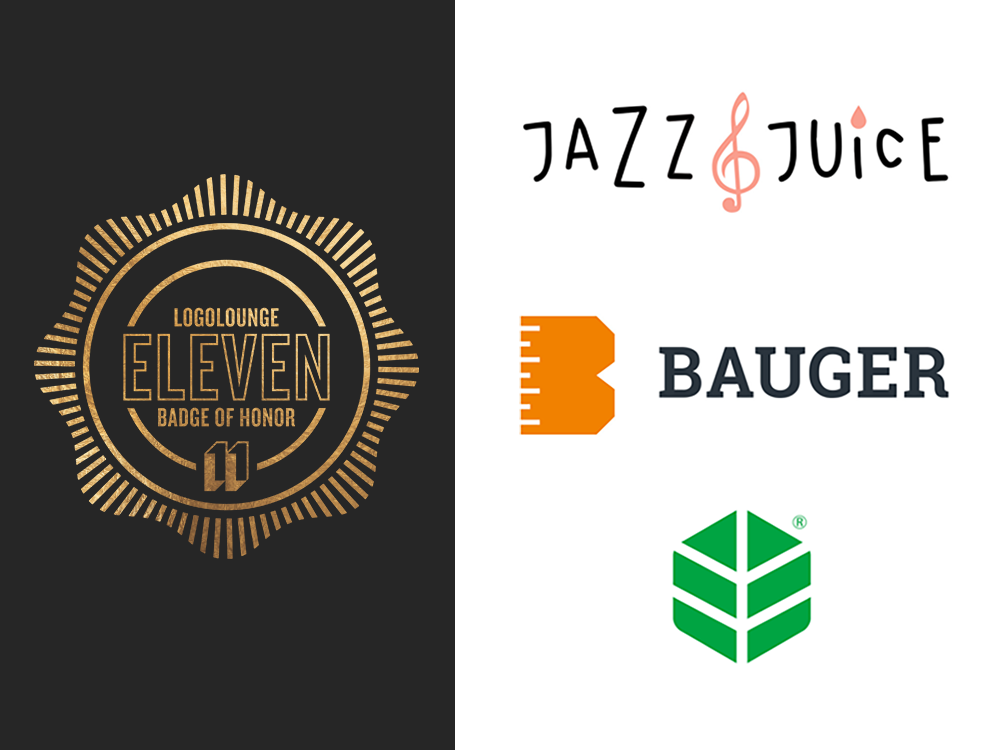
Logo Lounge is the one of the most respected and best-selling logo design book series in the world and I’m happy to share that 3 logos of mine were selected to be published in the upcoming Logo Lounge Volume 11, which is my 9th consecutive Logo Lounge book feature.

The 40,000 logo submissions were juried by an international panel of design superstars and only 2000 of the world’s top logos made the cut.

My 3 selected logos were designed for clients: Jazz & Juice (see my process video), Bauger Construction and Envira.

Thank you to Bill Gardner, his team and of course, the judges! This marks my 54th logo published in their amazing book series.


Volume 11 Selected Logos

These were my 3 logos selected for Logo Lounge Volume 11.

Logo Lounge Book 11 Selects

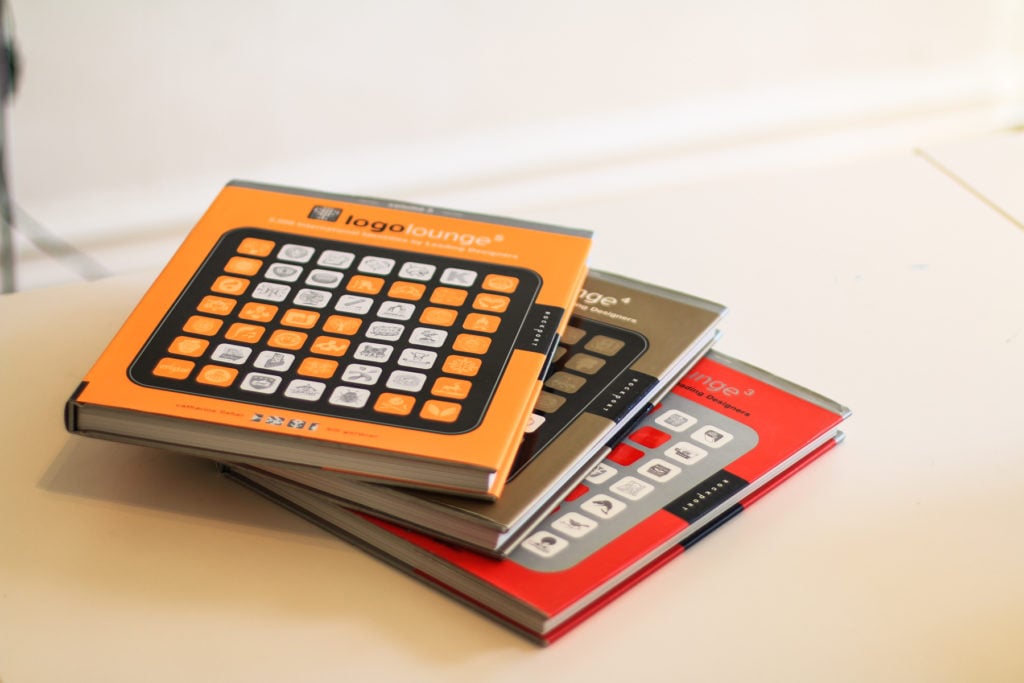
Logo Lounge Book Spread

A spread of previous Logo Lounge books.

LogoLounge Book Spread

Learn Logo Design:

Looking to learn logo design? Here is the best logo design course online:

Logo Core Masterclass (includes 65% off Adobe Creative Cloud)

The LogoCore Masterclass is the most in-depth logo course available, perfect for beginners and intermediate designers looking to learn logo design.

Master Adobe Illustrator, learn grid structures, how to vectorize a logo, presentation design, create a styleguide, build a creative brief, get valuable feedback, animate logos and so much more.

» Learn More

Get an exclusive 10% discount with coupon code ‘JUST10’. Simply enter the coupon at checkout.

LogoCore Masterclass

More Logo Resources

See here for the ultimate list of Logo Resources.

Logo Design Resources

Also see the 2019 logo design trends.

Logo Design Trends 2019