Thursday, 3 October 2019

12 Free Sources of Creativity For Logo & Brand Designers

This is a guest article contributed by Usman Raza.

Creating a logo is easier said than done. No online marketing or advertising campaign can succeed without resting on a powerful logo to identify the brand.

The creative designer has a rather difficult job of summarizing what the entire company represents in a tiny mark. To help with this job, searching for inspiration is a good place to start.

See our list of the best logo design inspiration resources below.

Also check out our 101+ top logo design resources.

1. Social Media Accounts

Social Media Accounts

Social media handles for logo design are an excellent resource that beginners should tap into. Some of the most popular platforms including Instagram, Twitter, and Facebook.

  • Instagram

Instagram is a treasure trove of data. It is chock full of useful logo ideas that inspire creativity. Some of the most popular accounts that we found to be useful include @logoinspirations @logoseum, @logis.ai, @logoimport, @logoplace, and @learnlogodesign. These creative logo accounts are useful for designers who are at the cusp of a new career and have yet to perfect the techniques and systems used to make logos from scratch. Follow these accounts to learn the art of the design process from scratch. Take a note of the typography, style, shapes, and spectrum of colors used. A little practice will help you create versatile logos, including simple, detailed, abstract, and fully illustrated ones.

  • Facebook

Join Facebook groups that have a dedicated community for logo design. Most of these groups have their own rules that must be followed. If you want to stay a member, you will have to abide by these rules. Below are a few Facebook Groups for Logo designers.

  1. Logo Design Club
    Logo Design Club has over 50,000 members since it was first launched. While it is a public group, they have a few rules that must be followed. The group isn’t a place to hunt for jobs or post new positions. It is a platform that lets like-minded individuals post original logos and ask for advice regarding logo design. If someone likes your work, they can contact you via private message.
  2. Logo Geek Community
    While this group only has around 6000 members, it is fairly active. The group is highly selective and exclusive to designers, which means the admins will ask for a description of you and your portfolio before approving you.
  3. Logo Design: Logo Designer Expert Idea
    With a community over 71,000 members strong and growing, Logo Design: Logo Designer Expert Team has the largest share of members for a closed group on Facebook. The group is designed for job projects, collaborations, sharing ideas, and posting your original logo. It’s a great place for both new and expert designers alike. They have a few rules that you need to follow.
  4. Just Creative Design Community
    A place to share & discuss design, logo design & branding.
  • Twitter

Twitter has a few awesome handles for logo designers to follow as well as lists such as the llogo list put together by Jacob Cass. Take advantage of the hashtags such as #logo and #logodesign to find trending logos that have received exposure.

2. Learn from the Competition

Learn from the Competition

At the end of the day, your competition is your greatest teacher, so it is important to study them closely. Which factors stand out about their design? Look at their core strategy. What is the business working towards? What are their corporate values? What does the business stand for? Often times, a logo is a brief glimpse into the business practices of a company.

If nothing else works, simply get a pen and paper and start scribbling down your own thoughts and ideas. Don’t restrict your thoughts or pass them through a ‘filter’ of what’s acceptable. Over-thinking doesn’t do any favors to your creativity.

Once you let your ideas flow creatively without putting too much thought into them, only then can realize your full creative potential.

Your subconscious mind is the source of the creative process, and once those random lines and curves start making sense, you will end up with the perfect logo.

3. YouTube
Youtube

YouTube is teeming with highly creative freelancers who love showcasing their skills and talent for absolutely free. Some accounts include Design Course, which has a free 2-hour long video about all things logo. Mohamed Achraf is a talented artist who has uploaded an impressive, highly detailed video about logo design. His 21-minute video provides you with all the information you need to build a powerful logo. It saves you from having to scour endless blogs, articles, and courses to learn logo design.

4. Dribbble

Dribbble

Dribbble is popular among logo designers because it’s full of ideas. It is a unique merger between a social media site and a freelancing platform, allowing users to share ideas and comment on their logo design ideas.

5. Behance
Behance

Behance has grown into a one-stop shop solution for logo designers to showcase their work. You can browse through an endless catalog of online portfolios of creative professionals across different niches. Or better yet, you can create your own account to upload your logos and receive feedback on it. Behance can be an excellent educational resource if you want to learn about the different types of logo design, including advanced animations.

6. Designspiration
Designspiration

As its name suggests, Designspiration specifically caters to artists and designers. The website provides them with a platform to share their ideas for free. What really stands about Designspiration is their unique search engine that automatically provides you with a list of relevant suggestions. Suppose your client deals in bathroom tiles, all you have to do is search for tile logos for a range of relevant ideas.

7. Logo Design Love
Logo Design Love

If you want to understand the artist’s thought process from start to end, then Logo Design Love has a blog and book worth checking out. It documents some of the most well known logo designers and how their journey to bring their creative ideas to life.

8. Flickr
Flickr

Flickr is home to billions of pictures and logos. Since the platform deals with user-generated content, you are likely to find some incredibly fantastic ideas, with a few lackluster ones being thrown in for good measure. A good idea is to join groups related to logo design to find some great images and ideas.

9. Deviant Art
Deviant Art

Deviant Art has a fantastic section for logos that you can browse. You are more likely to find artistic pictures here than on Flicks, which may or may not be a good thing depending on your project. Deviant Art has over 358 million images that are regularly uploaded by its 44 million registered members.

10. Reddit

Reddit

Reddit has a little known subreddit known as r/logodesign that has a small fan base regularly uploading logos, sharing ideas, and critiquing. Of course, reddit users are well known for lavishing praise on creative and talented designers and regularly shames people who don’t do as well. But it can be a great resource to upload your work and even attract new clients over time.

Don’t be afraid to upload your logo on r/pics to gain feedback from regular users who aren’t familiar with logo design. Prepare yourself for a barrage of harsh, honest, and frank criticism. Reddit has its fair share of trolls, so you’ll have to prepare yourself for them.

11. Visiting Influential Bloggers

Visiting Influential Bloggers

Blogs provide you thought provoking ideas and often include a discussion. Don’t be afraid to leave a comment or two to engage with the author. This is a great opportunity to start an outreach program to increase your visibility on the internet by leaving a link back to your website.

Below are a few blogs that contain thought-provoking ideas.

  • Just Creative
    Just Creative is a website owned by the highly accomplished blogger, Jacob Cass. You’re on it right now! He regularly shares his experience about logo design by writing excellent blog posts. His blogs contain useful tips and free courses related to logo design. Our favorite blog was 2019 Logo Design Trends & Inspiration, which features a collection of logos used by actual companies. What’s more is that the article describes the reasons why a particular logo was chosen and what its most standout features were.
  • High on Design
    The suitably named “High on Design”, is written by the Wix design team itself. You will find creative ideas, design inspirations, detailed tips, and tutorials. The website will provide you with an excellent resource to start website design. Our favorite blog is related to UX illustration, which you can read here. The blog provides an insight into content-first UX illustrations that can be used for web design, apps, and logo design.

12. Factors in Designing a Logo

Logo Design

Now that you’ve learnt a bit about creating logos, you should keep an out for the key factors that make a good logo design.

  • Stay Simplistic
    The moment you start flooding too many ideas into a single logo, it becomes confusing to your audience. Remember, logos are often tiny so they can be used on merchandize like letterheads and keychains. The only way you can make your logo look good is by keeping things simple. Often times a simple caption or a highly stylized letter is able to get the job done.
  • Staying Relevant
    It is very easy to get derailed during the creative process. What’s the first thing that comes to your mind when selling bathroom tiles? This is the most important thing you have to keep in mind: to keep your logo design relevant. Study your client’s business more closely to keep the logo design more compliant.
  • Try Experimenting with New ideas
    Just because all the businesses in your niche incorporate animals in their logo doesn’t mean you have to follow suit. If other laptop resellers are using laptops in their logo, does not mean you have to do the same thing. Don’t be afraid to experiment with unorthodox ideas, as long as they are relevant that is.
  • Creating Balance
    Balance is crucial in logo design because our minds are naturally predisposed to symmetry and find it pleasing. You can keep your logo balanced by keeping elements such as graphics, size, and colors equal on each side. The logo will be seen by everyone, including those who may not appreciate great art, so it is better to play it safe by choosing a balanced design.
  • Use Color 
    Gaining an understanding of color theory gives you a unique advantage, allowing you to create thought provoking, visually stunning logos. Colors evoke different feelings in a person, such as anger, happiness, sadness, passion, strength, and love. You can learn more about the psychology of color here.
    1. The logo should be legible in black and white, dual tone, and grayscale. In other words, your logo should be universally compatible across all platforms.
  • Research Your Client’s Business
    Before you can even begin to start logo design, you need to thoroughly research your client’s company and its audience. This will help you determine the ideal design style from the get go, saving you from retreating to the drawing when the design starts falling apart.

—

Author bio: Usman Raza is the co-founder of Christian Marketing Experts and marketing strategist working with various brands online, and the content marketing manager of Los Angeles Digital Agency. He is devoted to helping small businesses bridge success gaps by providing in-depth, actionable advice on digital marketing, SEO, and small business growth. Follow him on Twitter @usmanintrotech.

12 Steps to Make Awesome Video Content

This article was contibuted by Roman Daneghyan.

We live in a fast-paced world. Everything around us is becoming more bold, vivid and dynamic. Videos are becoming more embedded in society- they are part of most people’s everyday lives. In fact, videos have become vital in today’s media industry. Whether it’s entertainment, news, advertisements or reality shows- videos are an integral part of the global media landscape. More and more, videos are on the rise, with over 50% of viewers watching their content on their mobile phones (via Variety.com) and not via their desktop computers. Using video marketing and well-produced promotional videos are an essential ingredient in any marketing strategy to develop your business and create brand awareness. Almost every successful business is adopting video marketing which is transforming the traditional advertising landscape as we know it.

There are a few reasons why your audience likes videos. For one, short videos deliver information easily, they’re entertaining, catchy and quick to digest. They’re also viewable on the go as a welcome break from ‘reality’- for example-  they can be watched in the train, bus, or even on a lunch-break. Videos can be informative, inspiring or educational. This engaging nature of video creates the ‘joy’ factor: global audiences just love watching videos. Yes- videos give people a boost including an actual dopamine release which stimulates the pleasure centers of the brain.  This fact would explain why people love videos as much as they do: it’s beautifully addictive. The most viewed video of all time is Despacito on YouTube with no less than 6.1 billion views as of May 2019- presumably some folk have watched the music video on repeat because they just can’t get enough! So this idea illustrates why it’s crucial to use video marketing as part of your publicity  to compete with other brands and products.

Since the internet has different market segments, your marketing strategy needs to be as strategically planned as possible. You and your marketing team needs to carefully map out your potential viewers and audience. More and more companies are investing in video marketing to increase sales performance and to deliver a better customer experience. Video is not only the most popular media form online, it’s also the most effective in communication. For example, users are able to retain 95% of the content of a video but only 10% of content in text format. So video is simply a much more effective way to get your message across!

Now we are going to show you how you can wow your audience with high-performing marketing videos by following these 12 steps:

1) Define Your Marketing Goals

First of all, define your marketing goals. What is it that you want to achieve with your videos? Is it boosting sales, or creating awareness of your brand or product?  Most marketers are looking for the best return on investment (ROI) for their clients. So you need to crucially define the goal of the messages that you want to bring across before starting to develop your video content.

2) Know Your Audience: Profiling Pro Tip

The next step is to create your content for your video marketing strategy. For that you need to create a story that will draw in the attention of your viewers. Instead of trying to sell something, rather wrap your message in a visually appealing story. But first you need to find out what kind of content actually suits your brand or product. So you need to figure out your audience or buyer persona. A good way to do that is to visualize your ideal client: age, class, male/female, lifestyle, hobbies, location and so on. It is really important to have the right buyer persona in mind when developing your content marketing plan.  Your audience will also shape and ultimately define the tone of your brand. You will have to evaluate whether your brand approach is light and entertaining or rather serious and corporate? It all depends on your audience and can be adapted along the way. What type and style of video would your ideal customer love? How does your product best connect with your customer? What problem does it solve?

Once you have answered these questions and you’ve developed a concrete profile, set that profile as a standard to evaluate all of your strategic planning against. So whether you write something, design a flyer or shoot a film, everything that is being produced speaks to this buyer persona. That’s our profiling pro tip.

3) Remember First Impressions

Thirdly, have a strong introduction. Studies have shown that one-fifth of viewers swipe away a video within the first ten seconds! So just like in a good book or when meeting someone for the first time, so also in videos: it’s really important to hook the viewer within the first ten seconds through a solid and intriguing  introduction. So make sure your introduction stands out so that the viewer is hooked and stays tuned in for the rest of your message. You’ve heard it before that “first impressions last!”

4) Use A Strong Video Title

It’s important to have a strong video title that will create a sense of anticipation to watch it. If your video name isn’t catchy, no one will bother to click ‘play’, so don’t risk being boring! You want to engage the viewer right from the onset, so make the video title entice the audience.

5) ‘Show, Don’t Tell’

Try to stay away talking about the product too much. Rather tell the story and focus on the mission. This is storytelling biggest secret: ‘show, don’t tell’. Give your viewers more than they expect and they will come back again for more. For example, the Nivea brand experts use emotional videos that focus less on the product but more on the experience.

Check out this video by Nivea:

Nivea Ad

A Nivea commercial that is driven by the characters and impressive setting- can you guess why?

This overall Nivea video style shows its emotive intent, and portrays an endearing mother-daughter relationship. Why so? This relatable scene between mum and child speaks of trust, tenderness, care and protection. All these qualities will now be transferred  in the audience’s minds from the people to the Nivea product by association. That’s the magic power of suggestion!

6) Plan Your Video Flow

Once you have your content and visual outline ready, you can look at your video content scheduling needs. Your team needs to look at how many videos per week or per month you will have to make. Will it be one video per week? Or would three a week be more effective? Once you have decided on how many videos you want to schedule, you can look at the broad content of your videos.

7) Produce The Video

Your next step is now the production side of the video making. Given that you are working in a team, you would need to split up the roles and divide tasks into each part. Essential tasks include:

  • Scriptwriting or interview questions (for example, will it be a scripted video or spontaneous live recording?)
  • Lighting and sound (do you need extra lighting or does natural light suffice? Is there a mic on the camera or do you need extra equipment, such as a boom or a lapel mic?)
  • Location and setting (where would be a good setting to record the video without too much background noise?)
  • Editing (who will edit the footage and with what software?)
  • Online marketing (who will be responsible for uploading the videos, keeping track of the SEO data and using the most efficient channels?)

In my experience, this work above can be significantly streamlined by using a service like Renderforest which is the equivalent of WordPress for video. Before WordPress you used to have to hard-code your own site. Likewise, before Renderforest you used to have to shoot and edit all your own content from scratch. Now you can save time and money and get quality results. Renderforest assists with creating some really strong video marketing content quickly and affordably  whether you need product promo’s, company overviews and more.

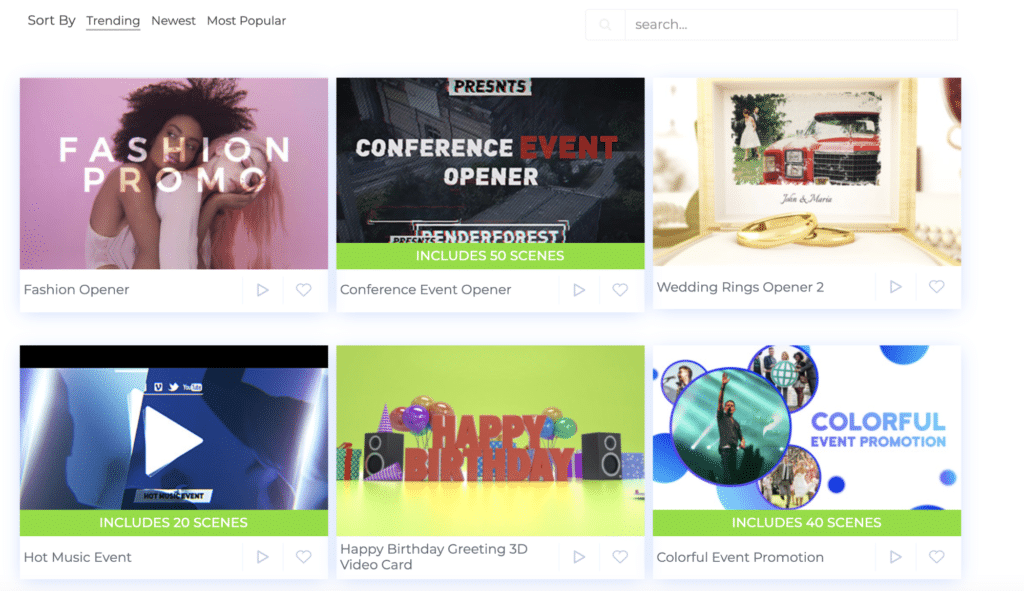
They have loads of video preset templates to  choose from that can quickly and easily be customised for your brand even if you have no video editing background. For example, Renderforest’s ‘event promo’ video templates come in a load of sleek and trendy varieties that can suit any business. You can even search for ‘trending’ or ‘most popular’ varieties. . The videos are quick to produce and easy to assembly with intuitive customization options. Check out their website.

Renderforest’s Event Promotion Video Templates

8)  Choose Your Video Channels

Once you know what kind of content you want to produce, you have to decide on which ‘channels’ like YouTube, Facebook, etc,  you want publish your videos. This again also depends on your audience. Will your audience engage more with a video that is posted over Facebook or YouTube? Most publishers post videos to a range of social media channels to maximise total audience reach since the cost of publishing video on social media accounts is generally minimal or zero. Those videos can then be ‘boosted’ with paid promotions within the social media channels to ensure more views depending on your budget.

Publishing videos on YouTube, Facebook or Vimeo are all highly recommended. Those online platforms guarantee a large exposure – with YouTube alone racking up over 500 million hours of video watch time a day YouTube belongs to Google, therefore your Search Engine Optimization (SEO) is immediately boosted through using the most popular search engine channel.

Also note that when promoting video over Facebook, uploading the video onto the native Facebook app rather than sharing a YouTube video long Facebook is really rewarding, as the videos have a ten-times higher reach than YouTube. This in turn also increases your SEO.

9) Harness The Power Of Music

Music is key to a strong and inspiring video. To have a good score will create an emotional relationship to the viewer, which in turn will create a stronger bond to the brand. Think of the power of music videos like Despacito to drive astronomical numbers of views. Take this pro tip from cinematographer Carlos Perez- the director of ‘Despacito’. Carlos attributes part of the video’s viral success to the fact that the video “directly supports the vibe of the song”.  So if we borrow from this advice, we could say make sure your song “directly supports the vibe of the video”. So don’t be shy in using some catchy, toe-tapping tunes to craft your video message.

Vevo Ad

Despacito – the World’s Most Catchy Video

10) Make Videos Smartphone Friendly

You know how watching a funny cat video on your smartphone is the last thing they do before going to bed??? Well… I do that too!  So remember to make your video marketing strategy mobile phone friendly. More and more users have access to the internet and love using smartphones to watch videos and surf their social media accounts. By 2020, there will be 6.1 billion smartphone users globally (via TechCrunch).  That’s a huge potential cellular-based audience. So make your videos easily accessible on cell phones by adding captions if the video is watched on silent, and by keeping the videos short and sweet.

11) SEO-Optimise Your Video

Include frequent data analysis in your marketing strategy. Through thorough Search Engine Optimization (SEO) techniques you can increase the exposure of your video  online. A well-written description of the video next to the post, for example, will help to increase your SEO.

12) Consider Live Video

Once your video is complete, you need to find the right channels that suit your video marketing strategy. BUT, if you record live, your content won’t need to be uploaded separately, since it will go straight online through the online channel that you use. For example, Facebook has a live recording stream, as well as Instagram.

So to wrap up, using videos as part of your exciting marketing strategy is a non-negotiable, a no brainer- you’d be crazy to ignore it, but you’ll be delighted to discover it! Using good promotional videos is super important for any business development and creates outstanding returns on your investment. Renderforest has made it really easy to create pro videos from scratch, so there’s no reason not to have your own awesome video marketing project.

As a brand, you want to create a long-lasting relationship with your audience, so the more intense your video marketing plan is, the more likely it is to build a loyal audience who will soon become a loyal fan base, who will soon become loyal customers!

—
Roman Daneghyan is the Chief Marketing Officer at Renderforest, a Content Marketing Specialist and an Expert in SEO, Social Media Marketing, and Link Building who enjoys sharing the experiences gained along working as a marketer and helping other entrepreneurs succeed.

Build a Powerful Brand With These 13 Actionable Tips

This article was contributed by Nico Braille.

Let’s face it, starting a new business is never the easiest of things, and more so if you’re in a competitive niche or industry. The late nights, huge financial demands, and all the sacrifices that go into it can feel overwhelming but is in most cases worth it in the end. A key part of the process is branding.

Essentially, branding is a marketing practice in which a business creates unique elements like its voice, symbols, web design, and name to help customers identify and recognize it any time they encounter it. As you can imagine, a lot of creativity and patience are needed to create a brand identity that etches in the minds of your customers.

In this detailed post, we show you 13 simple but effective tips and steps you can follow to create a powerful brand that helps your business stand out from the crowds and ultimately bring you more customers.

You can never please everyone. Don’t try it.

Can you imagine trying to meet the needs of each of the 7 billion people in the universe today? Is that possible even if you had all the necessary resources at your disposal?

Start small by targeting an audience that’s passionate about what you offer or produce. Strive to make a name within a small crowd instead of trying to be loved by everyone in the market. Sometimes it pays more to be a big fish in a pond than being a small fish in an ocean.

For the best results, take your time to identify your ideal market segment – this includes understanding its unique needs and preferences, buying power, location, gender, social status, etc. With this information, create super-targeted products and implement marketing strategies that are sure to appeal to this group of people.

Image matters

This is why the best business people and consultants dress to kill while others spend thousands on top-of-the-range cars to impress new partners or financiers especially during those all-important first meetings. The impression you set for yourself to others plays a big role in how they perceive you.

Want to attract big clients? You’ll need to project an image of being big yourself. Most of these high-end clients want to be sure they are dealing with a reputable and reliable person or company, and image is what they look at first.

A caveat though – don’t go so over the top that you end up being dishonest with your branding. Start by envisioning the future of your business – where you’d like to be in the future – and project your image based on that. This way, you’ll be able to attract the right prospects who will then thrust you to those heights.

Blog about your business

One of the most effective ways to promote your brand is to blog about your business. By sharing your industry knowledge and providing valuable content that your audience loves, you’ll establish yourself as an authority and build great relationships with readers.

For the best results, try publishing evergreen and engaging content to keep readers wanting to learn more from you. While at it, be sure to mix different types of content formats like texts, images, videos, podcasts, and infographics. Most importantly, take care of all factors that affect user experience including navigation, visuals, and site load speed.

Fast loading speed is in particular incredibly vital and something you cannot afford to take for granted. Getting a good host like the ones recommended here should be the first step to having a fast site.

Leverage the power of social media

Gone are the days when the only ways businesses could interact with their audience directly was through paid media coverage, emails, and phone calls. All these methods shared something in common – they were either too expensive or cumbersome to offer results. A lot has changed over the past decade or so especially with the inception and the growing popularity of social media.

Today, platforms like Facebook, Pinterest, Instagram, and Twitter offer even the smallest of brands incredible opportunities to connect with their audiences and sell their products to them. All you need is to sign up for free accounts on platforms that best suit your target industry, automate as many processes as you can, publish useful content always, and where necessary, use influencers to speed up your growth rate. You can even choose to use paid ads to get the word out there quicker and to a highly-targeted audience.

Consistency is key in branding

As we mentioned earlier, branding entails the deliberate actions you take to remain memorable in the minds of your audience. It is what users see, read, or hear about your business and instantly think or visualize it. For this reason, it’s crucial that your branding is consistent to avoid causing any kind of confusion among your customers.

By consistent, we mean using the same tone in your content, promoting the same message throughout, and sticking to the same values and quality. What’s more, strive to deliver consistently on all your promises to customers to foster that all-important belief in your business.

You’re allowed to rebrand, but don’t do everything overnight

Let’s admit it, we are human beings and this means, every once in a while, we yearn for changes in our lives including wanting to try out new things depending on the changing tastes and preferences. It is no different in branding.

From time to time, you may need to tweak some parts of your existing brand, usually to reflect any new changes in your products or services. If this happens, it can be tempting to do a complete overhaul of your strategy but this is likely to impact your business negatively. The reason is that you’ll probably upset your customers and drive them away especially if the changes are quite radical.

To avoid such situations, consider updating your branding gradually, and where needed, inform and consult your loyal customers regarding the upcoming changes. This helps you retain most of them while opening doors to new markets.

Be human

Your audiences are not only interested in what you offer but also you as the real person behind it. This is why the reputation of big names like Mark Zuckerberg, Bill Gates, and Steve Jobs grew and have continued to grow nearly in the same measure as the companies they lead. The same people that search and use their respective products also take an interest to know who runs them.

Always seek to show your customers that your business has a human side – that there’s someone who cares about their needs and is doing everything possible to create useful products for them. Meet and interact with them on social media, respond to their emails, and send them good wishes on special days. All these, while appearing small and not-so-important deeds, will go a long way in building great relationships that enable your brand to stand out in its market.

Invest in simple but memorable designs

Which color pallets define your brand or website? Is your logo unique and easy to remember? Having memorable design elements will go a long way in boosting your brand identity.

Computer Desk

Take an example of Apple – any encounter with an image of its famous bitten apple quickly reminds you of the brand and its highly-rated smartphones and other products. The same case applies to many other world-renowned brands like Coca-Cola, KFC, Mercedes Benz, and Adidas. They keep everything about their branding simple so it becomes easier for customers to remember them.

The idea is to avoid overcomplicating your brand. Help users remember your business by using a compelling logo, well-balanced color combinations and shades, and high-quality images.

It’s never too early to start branding

A lot of new business owners fail to prioritize their branding process, only starting work on it way later when their businesses are already established. Don’t make this mistake – as soon as you’ve chosen the direction you want to take for your company, create and begin implementing your branding strategy right there.

Remember, you’re oozing energy and passion at this moment and there couldn’t have been a better time to get creative with your branding work. And no, don’t worry about not having a clear path or definite idea about the products and services you’re creating when starting out. A brand is not defined entirely by that but is rather a combination of your set mission, vision, values, and business goals.

Associate with other big brands

There’s power in association and learning how to leverage it is one of the quickest ways to catapult your brand even if no one knows you. The connections you create with other brands, whether inside or outside your industry, determines how strong or weak yours grow.

For example, can you imagine your newly founded company getting a mention on big websites like Forbes and the New York Times? How much publicity and reputation can you get from this? However, you don’t need to start this high. Start with your existing circle – college mates, friends, family, and colleagues.

Can you use their connections – through their social media accounts or blogs – to reach more people? Remember, any mention or recommendation from these people exposes you to others who trust the messengers. This way, selling your brand to this group of people becomes easier as those you directly have a relationship with have already paved way for you.

Get creative with your brand awareness campaigns

Let’s admit it, for a business to thrive in the super-competitive environment of today, it has to do something more than the ordinary in addition to offering excellent products that solve users’ problems. And when it comes to branding, incorporating a few outside-of-the-box ideas into your strategy will help to fast-track your results.

A few proven ideas you can consider include here:

  • Running a hyped contest on social media
  • Designing and distributing infographics
  • Running a podcast
  • Setting up a referral or affiliate program
  • Using paid ads and remarketing campaigns

Have a clear brand positioning statement

A brand positioning statement is the phrase your brand uses to differentiate itself from its competitors. Usually, this statement touches on the brand’s unique offerings, its target audience, and the benefits or value users derive when they choose your products.

For most companies, crafting a clear brand statement that speaks directly to the target audience can be a major challenge. But it doesn’t have to be this way particularly if you understand your brand properly and have a clear idea of the direction your company should take.

Say you run a web design company and want to position yourself in a highly saturated local market. You can choose to go with the following brand positioning statement:

MyWebCompany is an all-in-one web design solutions company that helps freelance writers in Miami showcase their skills and sell their services using responsive portfolio websites.

In this example, MyWebCompany has a clear target market (freelance writers in Miami), the product (websites), and the value proposition (responsive sites that help writers showcase their skills and selling writing services).

Conduct regular audits to keep your brand fresh

So you now have a memorable brand that customers can associate with your business. What next?

For starters, it’s important to note that branding is a continuous process. It is for this reason that even the best companies are constantly evolving in an attempt to re-align their branding strategies with the changing market trends and preferences.

A brand audit helps you identify the different areas or elements of your business that are no longer positively impacting the perceptions of your customers towards your brand. This could include an advertising campaign that puts your company in not-so-good light, a bad review sponsored by a competitor that’s affecting you, a site that has become slow due to a spike in traffic or additional content, etc.

By identifying these issues, you’re able to stop your brand image from deteriorating and your business losing customers.

Conclusion

Building and maintaining a powerful brand identity is never going to be an easy task. Luckily, you now have a set of solid strategies that, if combined with a bit of creativity, should easily boost your company profile.

Have a branding tip or strategy that has worked well for your business? Share with us in the comments below.

Q&A with Jacob Cass on Designing the Logo for San Francisco

I was recently interviewed on Logo Inspirations for the logo & branding work I did for San Francisco. Read on below and be sure to view the full Case Study.

Overview

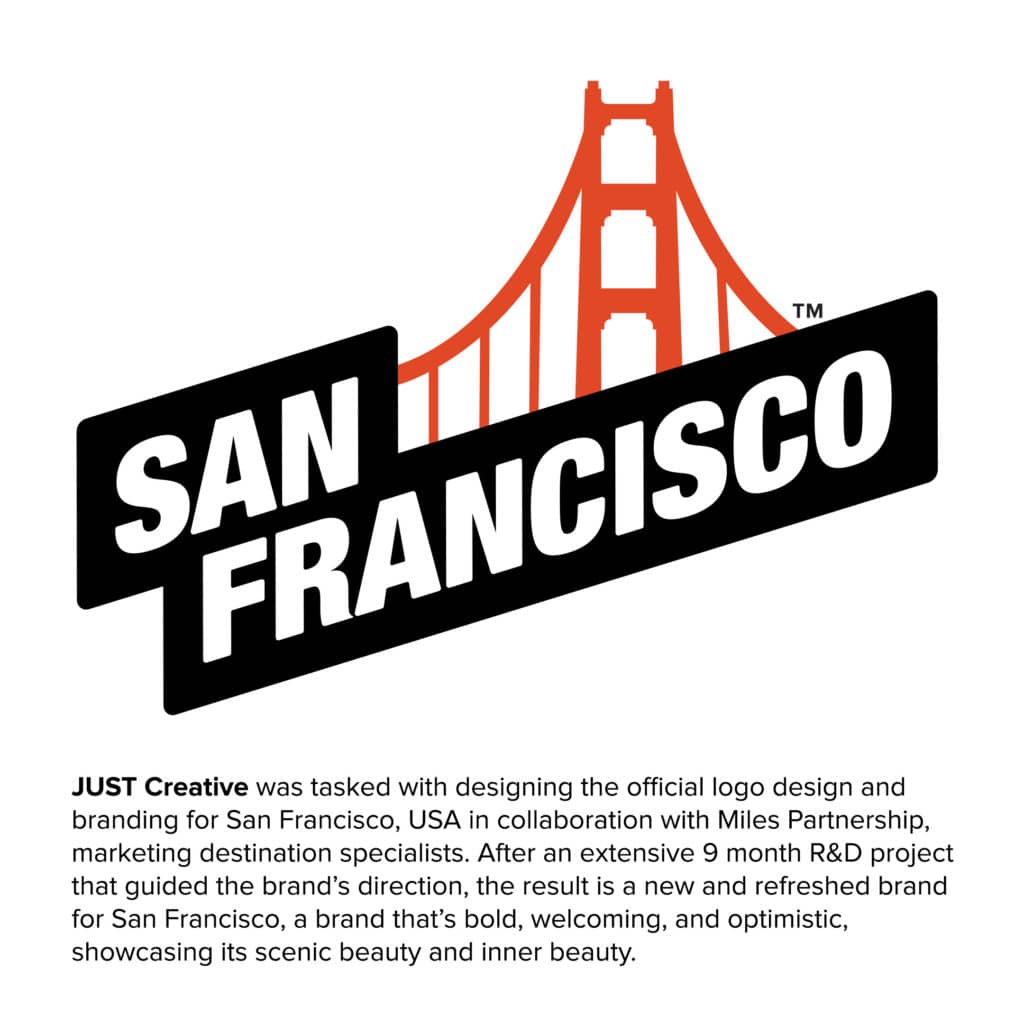
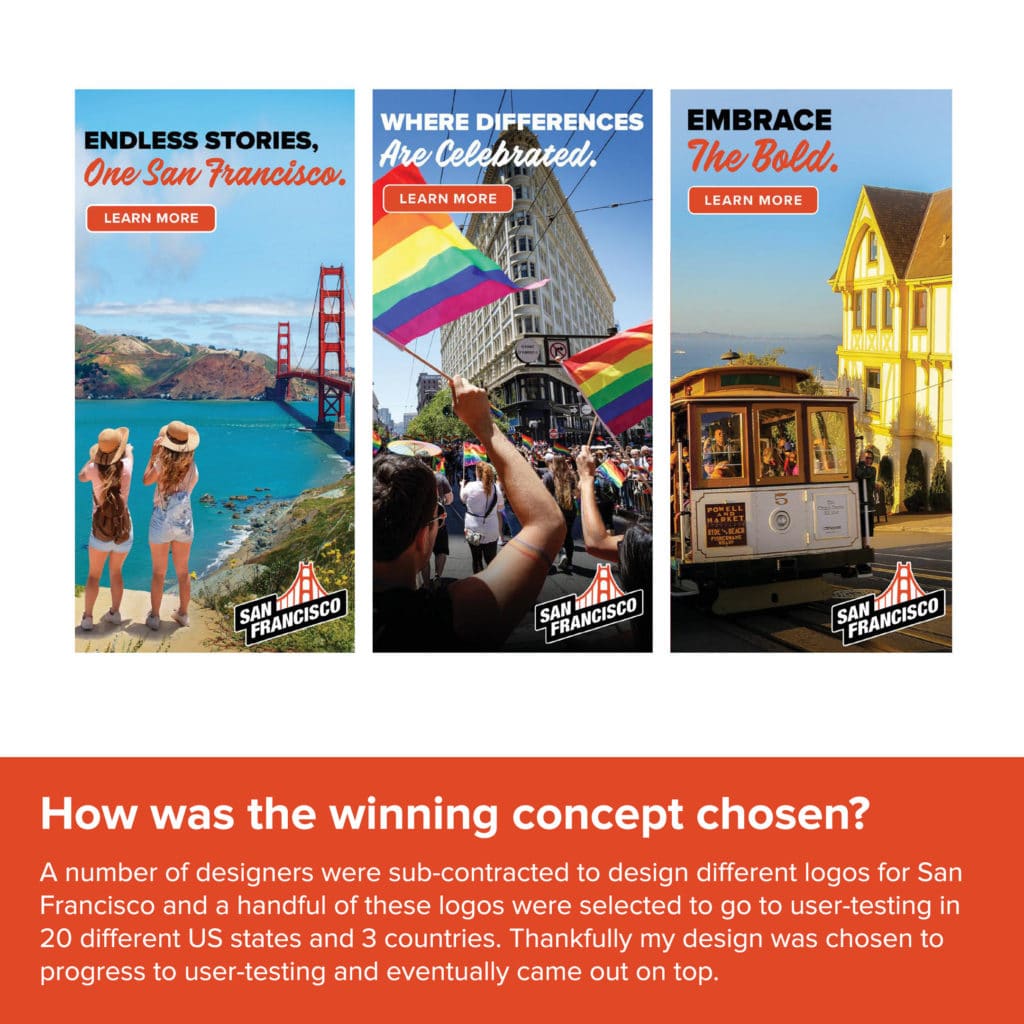
JUST Creative was tasked with designing the official logo design and branding for San Francisco, USA in collaboration with Miles Partnership, marketing destination specialists. After an extensive 9 month R&D project that guided the brand’s direction, the result is a new and refreshed brand for San Francisco, a brand that’s bold, welcoming, and optimistic, showcasing its scenic beauty and inner beauty.

How did the client find you?

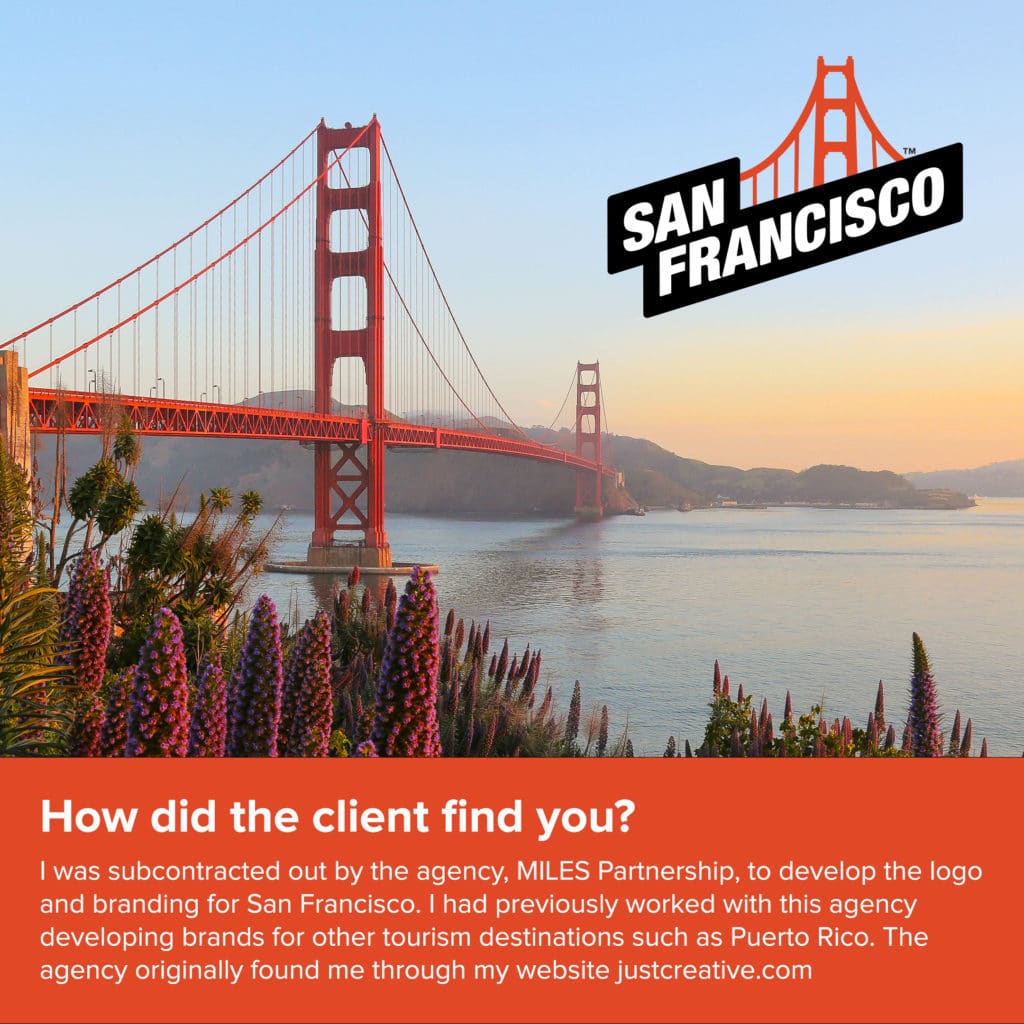
I was subcontracted out by the agency, MILES Partnership, to develop the logo and branding for San Francisco. I had previously worked with this agency developing brands for other tourism destinations such as Puerto Rico. The agency originally found me through my website.

What was the client looking for?

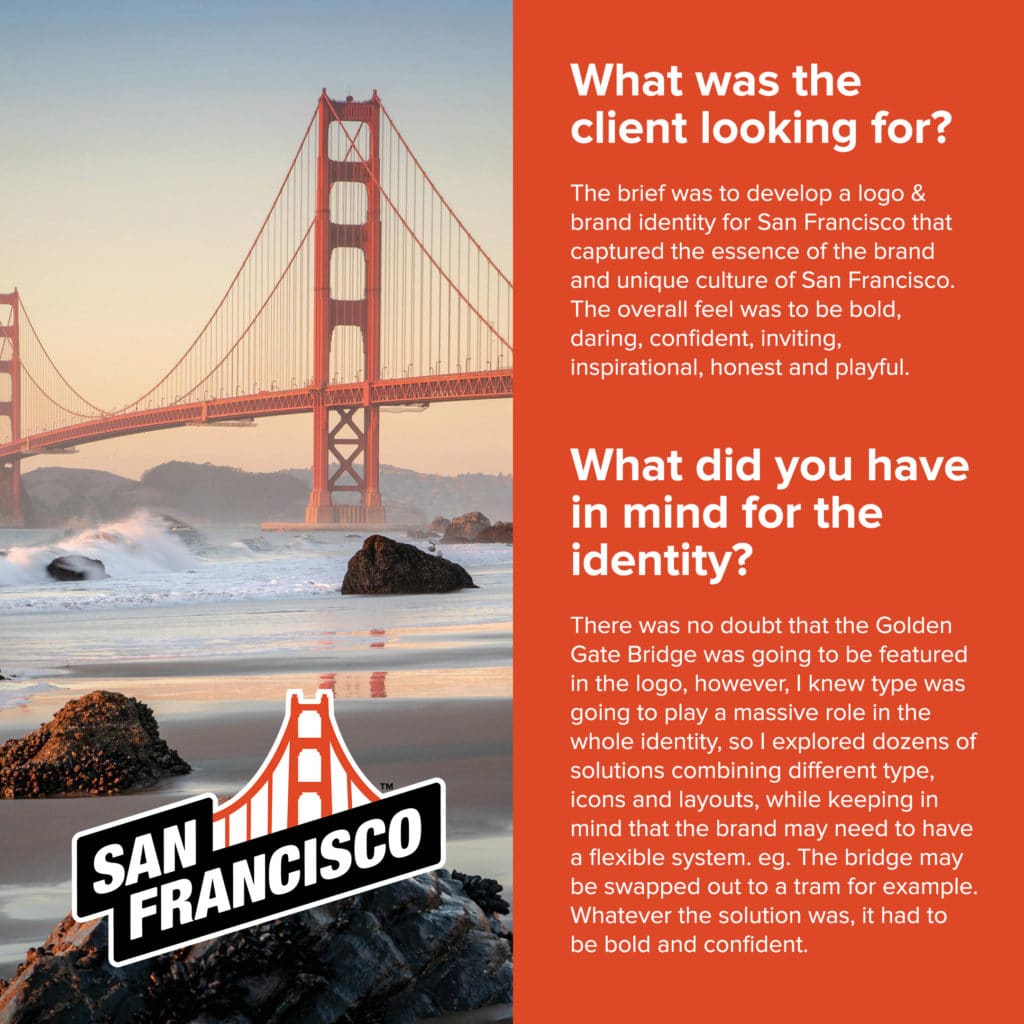
The brief was to develop a logo & brand identity for San Francisco that captured the essence of the brand and unique culture of San Francisco. The overall feel was to be bold, daring, confident, inviting, inspirational, honest and playful.

What did you have in mind for the identity?

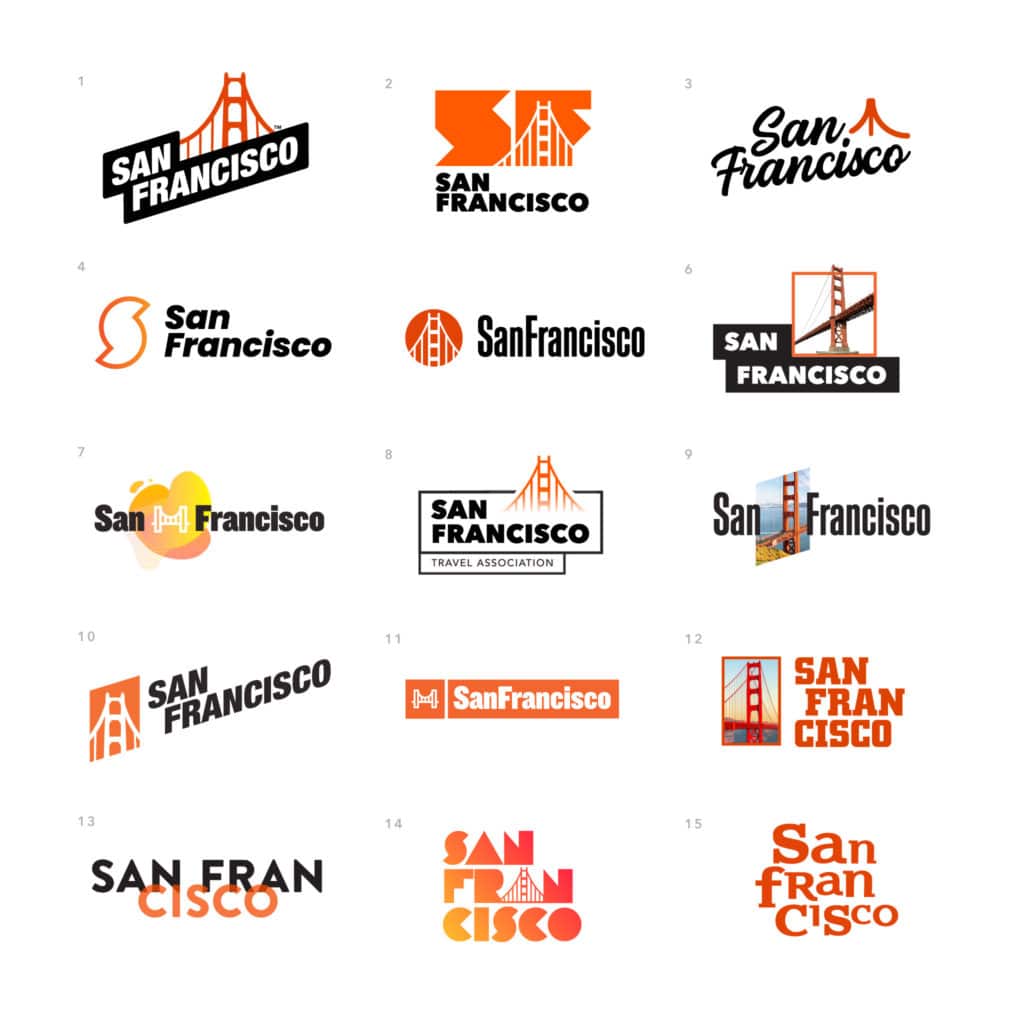
There was no doubt that the Golden Gate Bridge was going to be featured in the logo, however, I knew type was going to play a massive role in the whole identity, so I explored dozens of solutions combining different type, icons and layouts, while keeping in mind that the brand may need to have a flexible system. eg. The bridge may be swapped out to a tram for example. Whatever the solution was, it had to be bold and confident.

What was the process when creating the logo & identity?

There was a 9 month R&D project completed by MILES, that guided the brand’s direction. This research informed the overall positioning, voice and visuals for the brand. After extensive research of my own, I sketched ideas and then moved on to the computer. After about 8 or so rounds back and forth with the agency, we got to a shortlist of a few logos that were to be presented.

How many concepts did you explore?

Over 50 concepts were explored on my own with about 16 presented internally to the agency and 5 to the client.

How was the winning concept chosen?

A number of designers were sub-contracted and a handful of these logos were selected to go to user-testing in 20 different US states and 3 countries. Thankfully my design was chosen to progress to user-testing and eventually came out on top.

What does the logo represent?

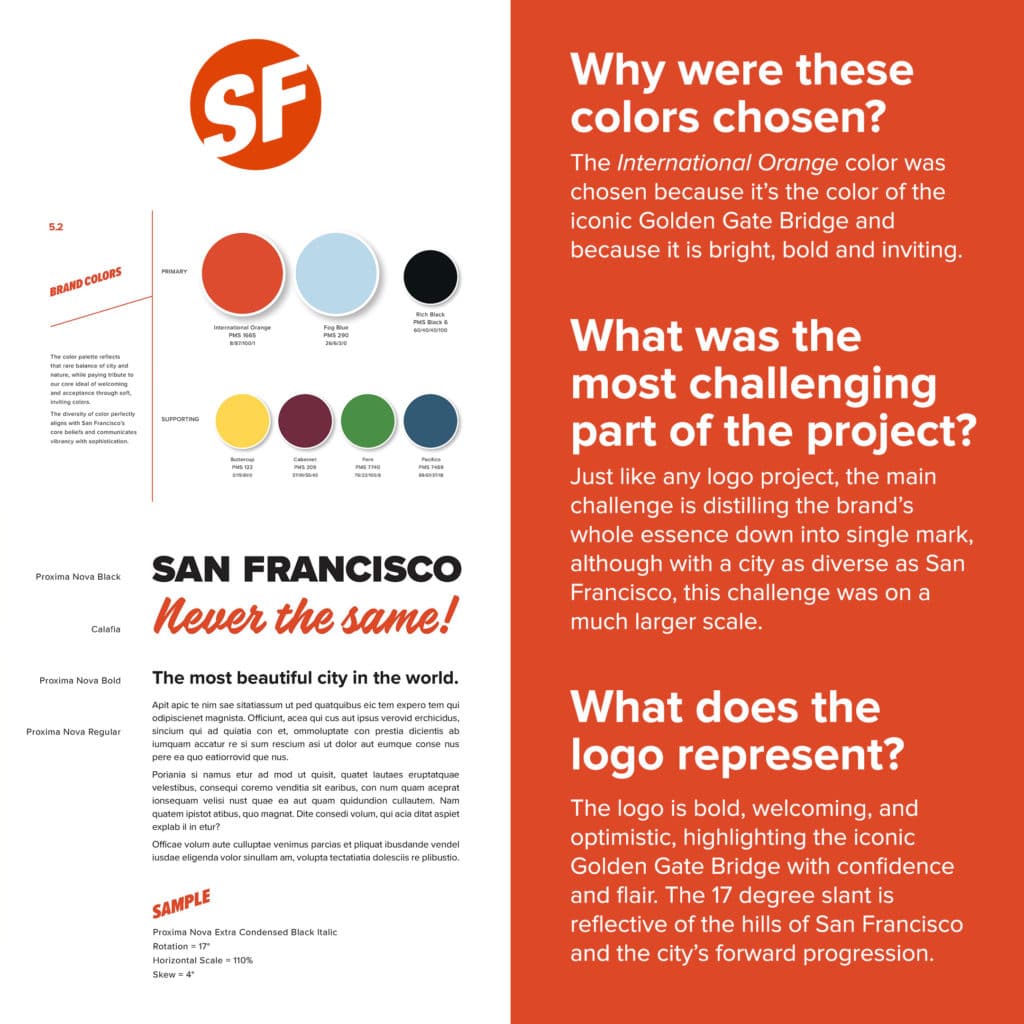
The logo is bold, welcoming, and optimistic, highlighting the iconic Golden Gate Bridge with confidence and flair. The 17 degree slant is reflective of the hills of San Francisco and the city’s forward progression.


San Francisco Logo Interview 2

San Francisco Logo Interview

San Francisco Logo Interview

San Francisco Logo Interview

San Francisco Logo Interview

San Francisco Logo Concepts

How to Get Clients: 15 Ways to Help Clients Find & Hire You

In a perfect world, we would never run out of clients and we would never have to go looking for work.

Unfortunately, we don’t live in a perfect world and for many of us, prospecting clients is part of the job, even when we would rather be working on projects professional or personal in nature.

What if we told you that you could have potential clients fill up your inbox or call you to work with you?

If you’re not asking, “Yes, how can I do that?” Then thank you for your time.

For everyone else, strap in cause with our tips, you’ll learn how to get clients to beat a path to your door.

Let’s jump in!

15 Ways to Ensure Clients Find & Hire You

While it’s a necessary part of running any kind of business, prospecting clients can take you away from the things that you got into business to do. 

Whether that’s creating logos for clients, writing articles to be published in major publications or simply helping people who walk into your store, those moments in time are valuable and build your brand, but what can you do to get clients without losing the time that is already so important.

Here are our tips to ensure you have a steady stream of clients:

Tip #1 – Keep your portfolio up-to-date

An out of date portfolio can severely hold you back from any new clients that may want to work with you. They don’t want to see stuff from three years ago, they want to know what you’re doing now. What you have in your portfolio is what you will be hired for – remember that! But just having a website though doesn’t guarantee that people will come to you. If you’re looking to attract potential clients, you need to market your work and some ways to do that are by using searchable portfolio sites such as:

  • Behance.net
  • Dribbble.com
  • Coroflot.com

If you have a website, make sure it’s updated and has relevant information such as work samples, testimonials from previous clients and make sure your contact information is easy to locate.

Tip #2 – Start a Blog (make sure you update it)

If you’re a designer with a website, you owe it to yourself and your current and future clients to have a blog on your website. This is to show off our expertise & position yourself as an expert. But when you start blogging, you need to know who your market is. 

You may think people want to read about articles on design, but the trick is to write blog posts that will appeal to those who you are trying to attract. Eg. Case Studies, tips for clients (not designers). By doing that, you’ll catch the attention of the right people and with enough time, it is very likely that it will lead to a new gig for you. 

But make sure you update it. A site with no updates is considered dead and not worth a client’s time.

Further reading: how to start a blog

Tip #3 – Create valuable content for others (increase your credibility)

Creating content for others (content marketing) provides you with exposure to anybody who would see it as well as provides value for others. For designers and creatives, this could be the creations of an infographic, an Instagram series of micro-content or a video on any given topic that would help your clients. 

No matter the type of work, the more people you can put it in front of for them to see, the better. Best known beats best, every time! The quality of your work will come through in whatever you produce and that quality can lead to people looking to hire you for your services.

Further reading: Increase leads, sales and ROI with content marketing

Tip #4 – Increase Word of Mouth

Word of mouth is probably the easiest option on how to land new clients on our list without really having to do any extra work to bring them on as a client. If you have a current client who loves your work and recommends you to someone they know, it’s like getting the golden ticket to Willy Wonka’s candy factory.

If you’re not getting any word of mouth clients yet, simply contact all your current clients and ask them if they have referrals.

If you’re doing good work, keep it up. People who own their own business likely know others that do too. Those connections likely need help in some aspect of their business and if you’re able to help them, the word of mouth cycle can continue on and on.

Further reading: 11 Essential Marketing Strategies for Small Business Owners

Tip #5 – Update LinkedIn (You know you haven’t)

Many hiring managers will look to Linkedin to find an ideal candidate for their open position. Linkedin is a great way to provide a digital cover sheet prior to an interview regardless if it is for a full-time job or single project, an up-to-date profile will stand out.

But you can’t treat your LinkedIn profile like your Facebook page. You need to have a summary on your page, your experience and skills have to be up to date. Adding relevant work samples of projects you may have worked on in the past is super important as is a professional-looking profile picture. Don’t use the one from Disney World.

Getting recommendations from former clients can let recruiters know that your work stands out among others that people look forward to getting from you.

Further reading: How to optimize your LinkedIn profile

Tip #6 – Keep industry-relevant social media updated too!

When it comes to social media, there are so many different options out there outside of Facebook and Twitter. In fact, there are many industry-specific social media platforms that you may want to look into depending on your field of work.

Just off the top of our head:

  • Github for developers
  • Dribbble and Behance for designers
  • Vimeo for videographers
  • Flickr for photographers

Much like LinkedIn, you want to make sure you keep your profile updated so if an employer sees your work, he knows how to get in touch with you.

Further reading: How to Use Social Media to Gain Clients for Your Design Business

Tip #7 – Network (it’s not a dirty word)

Many people hear the word networking and immediately groan. Those are the people you don’t want as clients. Networking can be a major part of finding clients. Attending conferences or local meetups for professionals at a local bar is something you should be at. Make sure to bring some business cards.

Face-to-face meetings leave a better impression on someone than talking over the phone or online. Attending events that are important to your area of focus is certainly important, but attending those where your potential client might be is even more so.

Further reading: Getting Offline – In-Person Networking Tips

Tip #8 – Capture Emails with Lead Magnets

One of the best and easiest ways to build a client base and keep clients coming back is to initially attract them to your website and your portfolio with a free giveaway or lead magnet. A free giveaway can be set up for visitors to enter in an email address prior to receiving their free gift.

Those email addresses can create new opportunities for you and possibly many new clients that can become referral machines for your long-term business. And it’s as simple as giving something away for free, even it’s it just a PDF ebook.

Further reading: How to Get Traffic & Leads with Content Creation

Tip #9 – Become a referral machine

Word of mouth is a pillar of getting new clients for your business, but even if you did an amazing job and your client is signing your praises only to you, then that really doesn’t work.

Try this. When you’ve completed a project, send a thank you email, mention that you would appreciate a referral and if it leads to a new client, the next project you do for the old client is at a discount as a thank you. Obviously, you don’t want to do this for every project you do for that client or take a ridiculous percentage off, but clients can like the idea of getting a good deal for minimal effort and can come back to you time and time again. Impressions are everything.

Further reading: How to find new clients

Tip #10 – Create a contact marketing plan 

This tip turns things over a bit. A contact marketing plan is when you choose a list of the ideal clients that you want to work with and then send them a personalized gift in order to get their attention and a possible meeting. 

Anything from a coffee mug to even something that relates to their industry with a personalized message will definitely stand out.

Never underestimate the power that a small simple gift sent through the mail can have on a potential client.

Tip #11 – Create A Course

If you’re having trouble getting clients, you can easily do what many others have done to attract potential clients. Create a course on Udemy or one of the other teaching platforms that are available. While you can make money selling your course to interested students, potential clients can reach out to you to hire you directly. You can also earn passive income this way when you don’t have any clients. 

Tip #12 – Run a Contest

Running a contest on Instagram can be a great way to build a potential client list. While many people can be pretty cautious about contests that may promise them something like a free tv, holding a contest where the winner receives something tangible like a free logo for their business or one-on-one consultation can be enticing and can create massive word of mouth for your business.

Further reading: 8 Winning Instagram Tips for Your Business

Tip #13 – Do interviews and podcasts 

We all know we should market our business because if we don’t, no one will find you. Part of your marketing plan should include going on podcasts or doing interviews whenever possible. Maybe a friend or friend’s friend has a popular podcast or the college you attended is looking to do a “where are they now?” piece for the alumni newsletter.

Both of these put you out and in peoples line of sight and hearing and can lead to many opportunities, while increasing your exposure. 

Tip #14 – Write Case Studies

Case studies are a great way for potential clients to see the results and success that you have had on a particular project. Case studies typically cover the client, any challenges that may have occurred, your process and the results of your work on the project. A case study can give a potential client a snapshot of how well you’ve worked with others in the past and what working with you will be like.

Tip #15 –  Use the $1.80 Strategy

While this $1.80 strategy was developed by Gary Vaynerchuk, its underlying principle is very old school. On Instagram or any other social medium platform, you can build a following by offering others value in comments to their postings, otherwise known as giving your two cents.

The trick is to search for topics that relate to your area of focus. Offering tips, advice or praise over someone’ else’s work can cause others to start following you and being seen as someone knowledgeable. That perception can draw in many different clients looking for your services.

How to get clients knocking on your door / inbox

Getting new clients can be difficult, especially if you’re relatively new in your field. To help, we wanted to come up with a list of ways you could attract potential clients and keep them and their colleagues coming back time and time again.

We hope our list has given you some ideas to incorporate into your prospecting plans in the future. Do you have a great tip that isn’t on our list?

Let us know in the comments below!