Wednesday, 6 June 2018

Freelancing Freedom Masterclass is OPEN for enrollment

I love sharing online courses, however, I only get the privilege to share the Freelancing Freedom Masterclass by Brad Hussey, once every 6 to 8 months as the doors are only open for one week.

This masterclass has proved to be one of the most popular courses since I started sharing it 3 years ago, as it gives you step-by-step instructions to make your your freelancing dreams a reality!

The good news is that the course has reopened for new enrollments and it’s better than ever!

So if you desire to have a profitable freelance business that allows you to work from home (or anywhere), I highly encourage you to check out Brad’s course. I vouch for it 100%.

→ Click here for The Freelancing Freedom Masterclass

Watch the trailer video and read the sales page completely, and then make an informed decision about the life you desire to live.

Enrollment closes Monday, June 11th at 11:59pm MST and it won’t open again for at least 6 months.

Your Options

So, now you have two options.

Option #1: Keep being someone who just dreams about the freelance business they’ve always wanted. Create lofty goals and expectations and then do nothing.

Option #2: Join The Freelancing Freedom Masterclass and let Brad Hussey help you build a freelance business that will allow you to live the life you desire (not the “safe” one you are told to live).

What’s it going to be?

→ Click here for The Freelancing Freedom Masterclass

PS. If you’re looking for a sign, this is it!

11 Essential Marketing Strategies for Small Business Owners

This article was contributed by Kathy Gallo.

You’ve got a great idea for a business, you’ve got everything in place including your logo and now you need to find your customers.

You could offer the best products or services in the world, but that alone won’t help if your potential customers can’t find you – so you need a great marketing strategy to match.

Here’s our list of 11 marketing tips that are sure to increase your visibility and help bring lots of new customers your way.

1. Branding – establish a clear identity

Branding, Identity, Logos Explained Infographic

In order to communicate what your company is, does and stands for, you need to have a clear identity. Once you know what your company represents, you need a suitable name, a logo, colors and imagery that convey this to your customers.

There are several different options for how to do this, including hiring a freelancer or collaborating with an established agency. This kind of work can be costly, but it’s money well spent. Think about how huge companies like Starbucks or McDonald’s are defined by their brands, logos and colors.

When you have your logo, make sure you put it on everything, advertising, business cards, envelopes, email signature and so on to build brand awareness and visibility. You should also go beyond just “rubber stamping” your logo everywhere – your brand should be memorable even if the logo is removed.

Related Posts:

2. Know your business and know your customers

Customer Profiling

A common misconception is that there is some kind of one-size-fits-all marketing strategy that you can follow and expect great results, whatever your business. This is simply not true since all businesses are different, and all have different requirements.

Before you choose which elements to integrate into your overall marketing strategy, you need to think carefully about your target customers. What is their demographic? How old are they? Where do they live? What online services do they use? How do they look for your product?

Being clear about details such as these will allow you to develop a targeted and more effective overall strategy that focuses on the channels most likely to produce results for you.

Related Posts:

3. Use Facebook Ads

Facebook Ad Placements

Facebook Ads are one of the best ways to target a specific group. Your advertising can focus on factors such as age, sex, location, interests, online habits and so on.

The system is easy to use and is relatively inexpensive, making this a great way for you to reach the maximum number of potential customers in a short time.

Related posts:

4. Have a great website

Website Planning

If there’s one thing that will put people off your company, it’s having a poorly designed website. Think about it, you’ve done the hard part getting that click and bringing the customer to your site – and they find the site to be user-unfriendly, hard to navigate or not logically laid out.

This is such a simple error to avoid so don’t make this basic mistake.

Related Posts:

5. Understand the power of SEO

Power of SEO

One of the most important ways of directing web traffic to your site is through Google searches. Even as Google changes the search algorithms, you still need to keep your page keyword optimized to make sure you rank highly on searches.

It is well known that having your site show up on the first page of results hugely increases your chances of getting the click, so do everything you can to make sure that’s where you are.

Related Posts:

6. Don’t forget email

The Power of Email List Segmentation

Email has many advantages as a marketing channel. It is easy to do, easy to automate, allows instantaneous communication, costs very little and can reach a large number of potential customers with the highest open rates, especially if you segment your list as shown above.

Once you add somebody’s address to your mailing list, make sure you provide interesting, valuable and relevant content that people will actually open rather than deleting immediately or sending to the “spam” box – otherwise, you are just wasting your time.

The main idea is to get people to come back to your website at a later date when they are likely to buy your product. Email leads still have one of the highest conversion rates of all sources.

Related Posts:

7. Use Google My Business

Google my Business

Google My Business is a particularly useful tool for local businesses with a local customer base. When people in the local area search on Google for the product or service you provide, this is a great way to have your business appear near the top of that search.

When potential customers see your profile and accompanying good reviews at or near the top of the list, your business automatically gains credibility and people will be more willing to trust you.

Related Posts:

8. Sponsor a local sports team

Sport Sponsorship

With so much being done online nowadays, sometimes people forget the more traditional ways of gaining visibility. For local businesses, sponsoring a local sports team is still a great way to raise awareness of your company.

People love their local sports teams and having your logo emblazoned on the kit will make people associate your brand with the local area. They will be more likely to think of you when they need your product and will be more likely to come to you due to that local association.

Related Posts:

9. Promote product awareness with free samples or demos

Keurig Coffee

If you want to build awareness of your product, you need to let people try it. A great example of this is when Keurig wanted to move from making coffee machines for the office to producing machines designed for home use.

Despite the fact they had a fantastic product to sell, at the time a pod-based coffee machine was still a very novel idea, so they made an effort to demonstrate their Keurig Brewing System in stores and other high-visibility locations.

The strategy obviously paid off since the company has since gone on to dominate the US home brew coffee market and become a way of life.

10. Work the referrals

Word of Mouth

Use your existing customers to drum up more business: try to incentivize referrals to encourage your customers to bring in more.

It’s difficult to generalize here since this could take so many forms depending on what kind of business you run. However, if you offer rewards like free products, gifts , discounts or something else, your already satisfied customers will be happy to bring in more leads for you.

The other advantage of referrals is that if your customers are recommending you to their friends, their friends will automatically be more predisposed to trust you. For this reason, referral leads offer a much higher conversion rate than many other channels.

Related Posts:

11. Use Google Adwords

Google Ad

While Google Adwords is more expensive than many other marketing options available, you should still consider it – because when done well, it can be a very powerful marketing tool.

Remember, the key is for people to find you when they search on Google, and by using Adwords, you can greatly increase your chances of people seeing your name.

Focus on what works for you

There are so many different marketing channels to pursue and things you can do to increase your visibility. Above all, don’t be afraid to try different marketing strategies – and focus your energy on what works best for you and your business.

Kathy Gallo is the founder of Daily Cupo. She is a health buff, she always believes that perfect health comes from drinking right, and aspires to provide an invaluable guide to health drinks.

Wednesday, 30 May 2018

10 of Today’s Biggest UX Challenges (And the Solutions to these Problems)

This article was contributed by Manish Dudharejia.

The user experience is clearly one of the most important aspects of a website, and it can be the deciding factor when it comes to making a purchase. Studies have found that when the customer experience is improved, 42% of businesses experience retention increases, 33% report more satisfied customers, and 32% see a boost in revenue.

However, cracking the UX code has been a puzzle that web designers are working endlessly to solve. While new technology provides designers with more and more tools and systems to improve their efforts, there are still many obstacles and challenges that stand in the way of a better UX for the customer.

Thankfully, many of these problems are not without a solution. Let’s discuss the top ten challenges with customer UX and how to beat them.

1. Gathering Marketing Data Without Interruption

Marketing and sales teams these days require all kinds of customer data to support their strategies and campaigns. However, their methods of gathering this information are often intrusive or questionable to the consumer (i.e. Facebook’s latest data collection fiasco). Consumer data collection is certainly not going away, as it is necessary for providing personalization and relevant content to customers. However, it must be done in a way that does not disturb the experience or put valuable information at risk.

Instead of asking for consumer data through opt-in forms or using cookies and monitoring systems, designers should test out more engaging and subtle collection methods. Using interactive content, such as quizzes, polls, or surveys is one easy way to gather valuable data.

Interactive web pages are known to have 500% higher engagement rates than static pages, which means designers can improve both data collection and the customer’s experience through unobtrusive approaches.

BeardBrand

2. Complicated and Confused Chatbots

Of course, the use of chatbots has increased greatly over the past couple years – since they are extremely helpful for customer service issues and boosting conversions. And while these virtual assistants have helped many companies provide instant support, they are not always the most user-friendly. In fact, 73% of customers who have had a bad experience with a faulty chatbot will not use them in the future, and 61% found them to be more frustrating to deal with and would prefer a human representative instead.

If chatbots are not sophisticated or smart enough to solve customer issues, they can inevitably lead to frustration, conflicting messages, or incorrect answers; all of which hurts the UX. The chatbot must be focused on conversational UX, rather than just trying to solve an issue quickly or offering a witty response. This can be done by incorporating smarter AI systems that use machine learning to pick up on interaction cues and emotional intelligence. This technology helps chatbots to virtually “learn” which responses are appropriate and helpful for various situations so it can improve with every interaction.

3. Implementing Personalization that Converts

There’s no doubt that offering personalized experiences can boost sales and customer satisfaction. In fact, 91% of consumers report that they are more likely to buy from businesses that offer these benefits.

Many websites are taking personalization a step further by optimizing landing pages for each specific customer in order to display content they believe is most relevant for that individual. But again, in order to do this, designers must be able to access tons of consumer data to determine a layout that will actually lead to conversions.

Netflix

Source

Smart personalization means that marketing teams and web designers have a deep understanding of who their customers are, what they want, and how to provide it through unique experiences. For example, brands can collect data from POS system transactions to see which products a customer has bought in the past and use this information to send personalized offers or coupons for related items. Teams can also create buyer personas and formulate page layouts around their needs and desires for targeted webpages that can boost conversions.

4. Understanding the Implications of UX

Every little detail of the major design elements adds to the UX in some way, including the layout, graphics, aesthetic, user interface, and even the colors of the landing pages. Unfortunately, there is often a disconnect between what a brand wants their webpages to look like and what will actually contribute to a positive UX. This is why it is so important to understand the impact of each little tweak and the effect it has on the UX of the webpage.

For example, let’s say you are building an e-commerce site for a client. The client and your designer disagree about the placement of the “add to cart” button on the product page. Perhaps the client wants the box at the bottom of the page while the designer argues that it would perform better if it is placed above the fold. Once the site goes live, an A/B test of these two variations can show how the placement of a CTA button can have an effect on its conversion rates.

5. Product Showcasing

When it comes to selling products online, the biggest drawback is you never really know what you are getting until it shows up. With so many sales options available online, brands must always work to create confidence and communicate why their product is the one that customers should go with. Just relying on product pictures and ratings from past purchases may not be enough, especially since every retailer uses these tactics nowadays.

This is where a little creativity and technology can go a long way. Online retailers have started using virtual and augmented reality tools to create 3D models of their products for a virtual “hands on” shopping experience that was never before possible. With this kind of technology, customers can see exactly how a piece of furniture would look in their living room or how a smartwatch would look on their wrist by simply using their smartphone.

AppleWatch

Source

This kind of product display brings the best element of the brick and mortar store to an online one. Customers seem to be delighted with this feature, too. According to recent reports, 40% would be willing to spend more on a product if they could test it with VR first, and 71% of shoppers would buy more from a business that offers this feature.

6. Time Consuming Tweaks

Designing a website is a long process, and even the smallest edit or change can take several hours to program and implement on a page. Plus, the pickier the client, the more tweaks will probably be needed during the process, eating up precious hours of a designer’s day.

Many designers are turning to AI automation systems to save time on the mundane tasks of editing, changing, and adjusting design elements. Adobe is currently working on a software system with a machine learning program to support design automation. Essentially, the program makes much of the design decisions on its own (all backed by analytical data of course) and automatically adjusts graphics, colors, and pictures to fit best on a webpage without any human assistance, saving web designers’ hours on projects by eliminating small, yet time consuming tasks.

7. A/B Testing Inaccuracies

While A/B testing is often a designer’s go-to strategy for comparing ideas and designs, it is quite limited and woefully inaccurate. In fact, reports have found that 8 out of 10 A/B tests deliver inaccurate results. Since many systems can only compare two variants at a time, there may not always be a clear winner between the subjects. Plus, there is always a chance that neither of these options is really the best, and it could take months before enough A/B testing combinations are run to find the one that should be implemented.

Once again, machine learning and AI can make this process much easier and more precise. Traditional A/B testing can only compare two elements at a time. But since AI systems can analyze great amounts of data instantly, these tools can compare thousands of variants simultaneously and report results much faster. For example, the online clothing store Cosabella used AI to run design tests for a website revamp. They were able to test several hundred changes over the course of just three weeks, and their redesign resulted in a 38% increase in conversion rates.

Videos

8. Fix The Consumer Behaviour Code

Knowing what motivates customers to make a purchase, complete an action, and so on has always been a challenge for web designers. Furthermore, they must know how to use this motivation to improve conversion rates. Of course, everyone’s preferences are different, and it is impossible to please everyone. However, thanks to recent case studies on consumer psychology, web designers can make better and more confident UX design choices that are proven to get results.

There are some key psychology principles that web designers should take into account when they are trying to improve the UX. For example, when people browse a webpage, they do not typically read it left to right like they would a book. Instead, consumers tend to follow a Z or F-shaped reading pattern when consuming online content. Designers can use this to their advantage by placing CTA buttons or important content along the path that a customer’s eyes will naturally fall to.

Evernote

Following this natural flow of visual hierarchy makes it easier for customers to consume content quickly, get an idea of what the website is about, and make a fast decision.

9. Cultivating Customer Confidence

With 47% of online shoppers worried about the security of their data, it’s imperative that the UX of the website builds customer confidence. Many customers feel that brands are not protecting their data, leaving them vulnerable to attacks and breaches. Their fears are not unwarranted; the number of data breaches from 2016 to 2017 has more than doubled.

The UX and perception of a website has a massive impact on company trust. In fact, nearly half of consumers base the credibility and trustworthiness of a website solely on its design.

In order for brands to instill this kind of confidence in regards to privacy and behavior tracking, websites must be designed in a way that promises security. This can be done through transparent data collection processes, which alerts customers when their information is being stored and what the purpose is. 70% of shoppers agree that they would be more comfortable with this sort of tracking if the brand lets them know how their data will be used. Moreover, brands should always provide an option to opt out.

Displaying security badges on webpages also communicates to customers that their information will be protected, and this sense of security can translate to higher conversions.

Trust Seals

Source

10. Navigating the Hottest Trends

Just because something is “trending,” doesn’t mean it is right for your design. For example, the concept of data storytelling is very popular at the moment, but it does not necessarily fit into every business. This tactic requires lots of consumer data, planning, and design tricks in order for it to be done well. Plus, just including this tactic as part of a website because it is “popular” does not mean that it will necessarily add to the UX and provide the customer any real benefits.

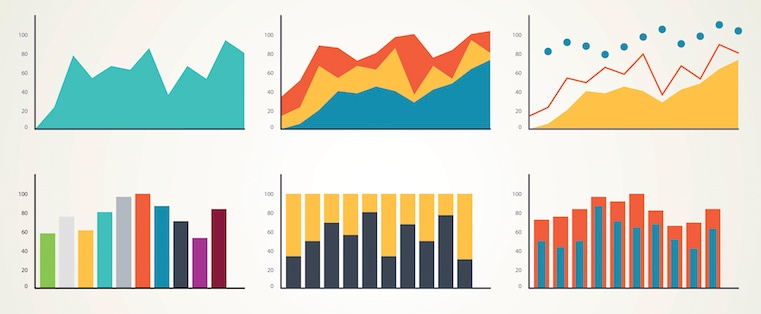
However, this does not mean that designers should exclude every trend they don’t understand or see the relevancy. Going back to data storytelling, there are lots of ways this concept can be used to illustrate an idea, support a claim, and even stir up an emotional response through data visualization.

Chart Graphs

Source

The important thing for web designers to keep in mind here is relevancy. Does the latest trend actually improve your website? Or does it distract from the main message?

Conclusion

With every year comes new sets of challenges and ideas that web designers must consider to improve the UX. But, designers should remember that there is a workaround for every obstacle. By carefully considering the customer’s needs, wants, and preferences, designers can make the necessary decisions to build a successful website that provides a better UX for every visitor.

Manish Dudharejia is the President and Co-Founder of E2M Solutions Inc, a San Diego Based Digital Agency that specializes in Website Design & Development and eCommerce SEO

Tuesday, 29 May 2018

2018 Logo Design Trends & Inspiration

The official 2018 logo trends report has just been released by Bill Gardner of LogoLounge.

(It officially launches tomorrow, but Bill sent me over an early copy to share with you guys!)

This report has been put together by carefully analyzing over 272k logos from the past 16 years, handpicking those that contribute to emerging trends for the year. The findings & insights are found below.

2018 Logo Trend Report Summary

  • Clean, modern aesthetics are moving toward curvy retro designs
  • Expressive serifs are coming into vogue
  • Nostalgic elements are being brought forward with contemporary aesthetics
  • There’s greater intensity on color ranges due to digital screens
  • Gradients are now being recognized as colors

Remember, as Bill says:

The key takeaway from this report is not to imitate, but to find a way to push these ideas forward and make them your own.”

2018 Logo Design Trends

Past Logo Design Trend Reports:

What are the Logo Trends of 2018?

Here is a summary of the top 15 logo trends of 2018.

  1. Tumbled Logos
  2. Parrellograms
  3. Outlines
  4. Modern Religion
  5. Neo Vintage
  6. Black & White Hipster
  7. Established Trademarks
  8. Blurple
  9. Gold
  10. Fatty Fade
  11. Linear Fade
  12. Field Lines
  13. Cut
  14. Serif Redux
  15. Punctuation

Further explanations are provided below.

Tumbled Logos

Over-amplifying & over-easing the effect of rounded corners.Logo Design Trend 2018: Tumbled

Parrellogram Logos

Solutions that signal “up and to the right”, often with the shape of a rectangle (parallelogram).

Logo Design Trend 2018: Parallelogram

Outlined Logos

Similar to classic sport team logos, an outline is added to the logo. It can make an unremarkable logo capture additional attention.

Logo Design Trend 2018: Outline

Modern Religion Logos

Rich symbolism displayed with multiple symbols, often giving a cult like feel.

Logo Design Trend 2018: Modern Religion

Neo Vintage Logos

The new vintage… nostalgic logos. Often type is placed over the top of a supporting image.

Logo Design Trend 2018: Neo Vintage

Black & White Hipster Logos

A matured version of the recent classic hipster badges using traditional elements, displayed in a counter-traditional way.

Logo Design Trend 2018: B&W hipster

EST TRD MRK Logos

Creating faux heritage through balanced design. EST. 2018? Yup.

Logo Design Trend 2018: Est Trademark

Blurple

Is it blue or is it purple? No, it’s somewhere in between. That’s a blurple gradient. This trend explores new & less traditional colour spectrums.

Logo Design Trend 2018: Blurple

Gold Logos

Faux gold created by metallic, flat or gradient tones. Often used to communicate prestige, elegance, and sophistication.

Logo Design Trend 2018: Gold

Fatty Fade Trend

Combining the past and present with a contemporary aesthetic, often with fat lines.

Logo Design Trend 2018: Fattyfade

Linear Fade Trend

Striped lines and channels.

Logo Design Trend 2018: LinearFade

Field Lines Logo Trend

Thick consistently girthed lines, reminiscent of the golden era of logos. Works well on small or large applications.

Logo Design Trend 2018: Fieldlines

Cut Logo Design Trend

Cutting letter forms for stylistic gesture and disruption.

Logo Design Trend 2018: Cut

Serif Redux

Bringing back warmth, humanity and charm with serifs, to counter the soulless sans-serif of late.

Logo Design Trend 2018: Serifredux

Punctuation Logo Trend

Commas, periods, colons, all used to send a certain message.

Logo Design Trend 2018: Punctuation

Pin These Logo Trends to Pinterest

2018 Logo Trends - Part 1 of 2 2018 Logo Trends - Part 2 of 2

A shout out to Bill Gardner & LogoLounge!

A huge thanks to Bill Gardner from LogoLounge (read our interview here) for putting this report together. In case you did not know, LogoLounge.com is the world’s largest logo search engine and for less than $10 per month (billed annually), members get unlimited uploads and access to more than 250,000 logos from designers across the globe. They also get immediate entry into the selection process for the LogoLounge book series. For more information, visit their join page.

Learn Logo Design & Adobe Illustrator

Learn logo design & Adobe Illustrator with the Logo Design Masterclass on Udemy. I reviewed the course in detail here. Get the course for just $12-$20 (usually $199) using this special promotion link! That’s 90% off!

Do you have any further logo design trends or inspiration to add?