Sunday, 28 April 2019

10 Content Distribution Tactics to Maximize Exposure in 2019

This article was contributed by Robert Katai.

Marketing and advertising are two industries that depend almost exclusively on content. A blog post, a podcast episode, a social media post, and even a visual banner or a corner street billboard, they all depend on the quality and value of the content they deliver to the audience.

While content creation and distribution is important, we need to understand that it may not be enough.

A study from Buzzsumo states, that 50% of the published content receives 8 shares or less on social media. This means that regardless of its quality, content needs to reach out to the right audience who digs and shares it with their peers.

For this, you need a solid content distribution strategy.

As of consequence, I have tried to break down 10 of the most lucrative content distribution tactics and tips you can include from now on in your content distribution strategy. Let’s dig in, one step at a time:

1. Choose your main content distribution channel
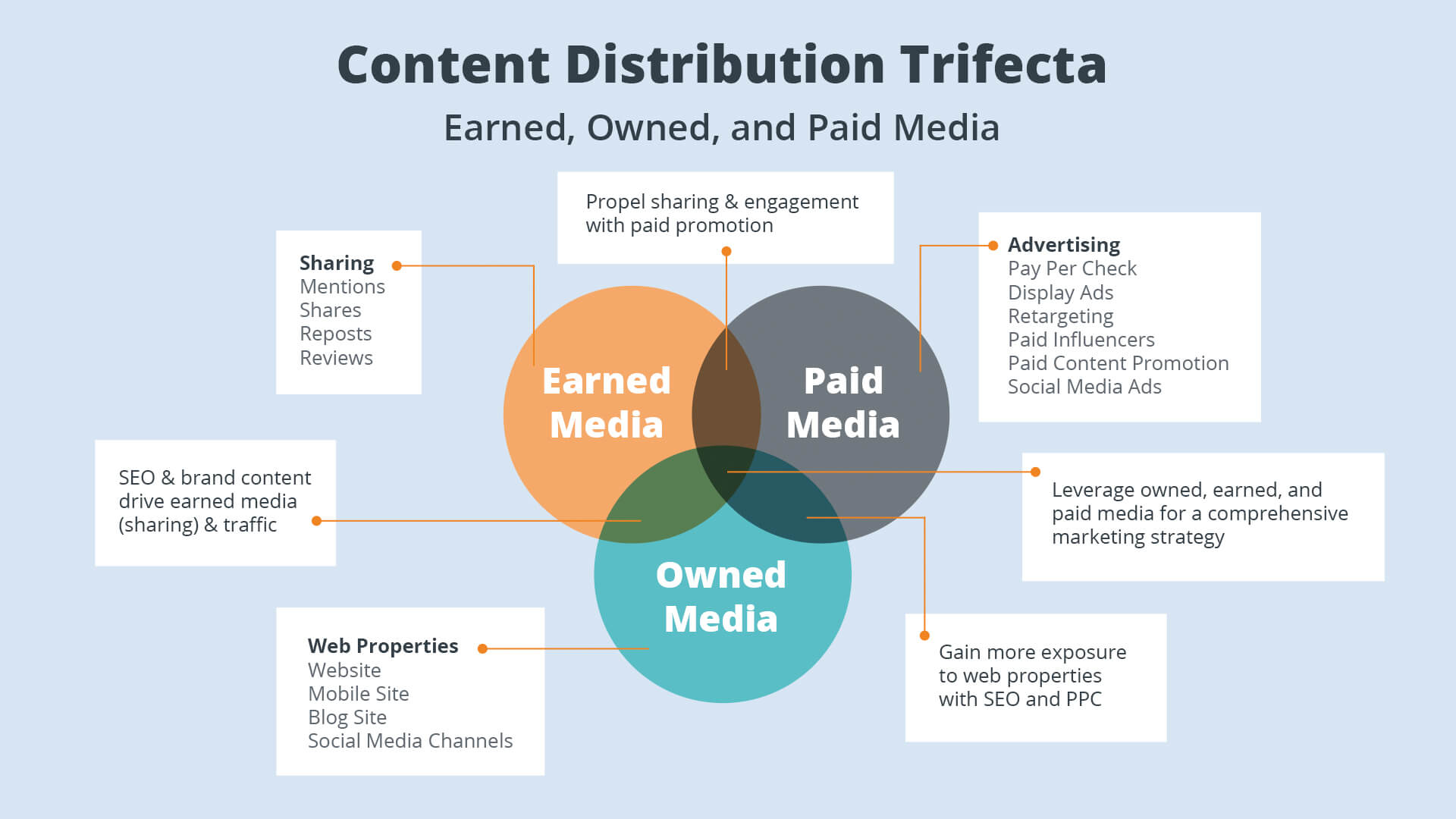
Content Distribution Trifecta

Photo Credit: Outbrain

First and foremost, you need to choose the type of content you want to publish and where you want to publish it.

Whether it is a blog, social media, an advertising channel or all these combined, you have to understand that the best content distribution channel involves your actual targeted audience. You should aim at being where your fans or customers are and this is sometimes even more important than the content itself.

Some of your best options include the following:

  • The website and/or the blog. This should be your main channel, your virtual/digital identity card.
  • How-To guides and Tutorials. They’re great regardless of the platform you choose to work with. You can publish such types of content on your blog, share them on podcasts or create video streams to educate your audience.
  • Social media. It allows you to interact with your audience and it can also complement your website based marketing strategy.
  • Podcasting. It should help you a lot with the mobile audience and of course, all those who prefer audio content instead of the written word.
  • Video content. The same reasoning as with the podcasts except that this type of content is intended for those who consume video rather than other types of content.
  • Infographics. They’re fancy, they’re appealing and they manage to condense a lot of information into a visual. What’s not to like about them?
  • E-Books. Unlike blogs and social media, E-Books bring a lot more information to the table. If you are up to the task and have a lot to say and write about, you can always choose to write an exclusive large-form content piece and share it with your audience.
  • Case studies. They take a lot of work but at the same time, they will get you a lot of attention and backlinks to your website. People need references, they need actual statistics and information and once they find it, they’re more likely to cite it in their own articles.
  • Forums. This option has a lot to do with communication and social behavior. People will trust you more if they perceive you as one of them. Talk to them, answer their questions, offer valuable insights and grow your reputation as a professional who is at the same time trustworthy and helpful. See Just Creative’s closed Facebook Group.
  • Newsletters. Once you get enough readers, customers or fans to sign up for them, newsletters provide you with an excellent and direct way to convey your messages, to announce new promotions, new products or services, to promote your brand and your valuable content.
  • Paid Ads. They can help you get to audiences that are otherwise inaccessible via traditional delivery channels.

2. Choose the right hosting service
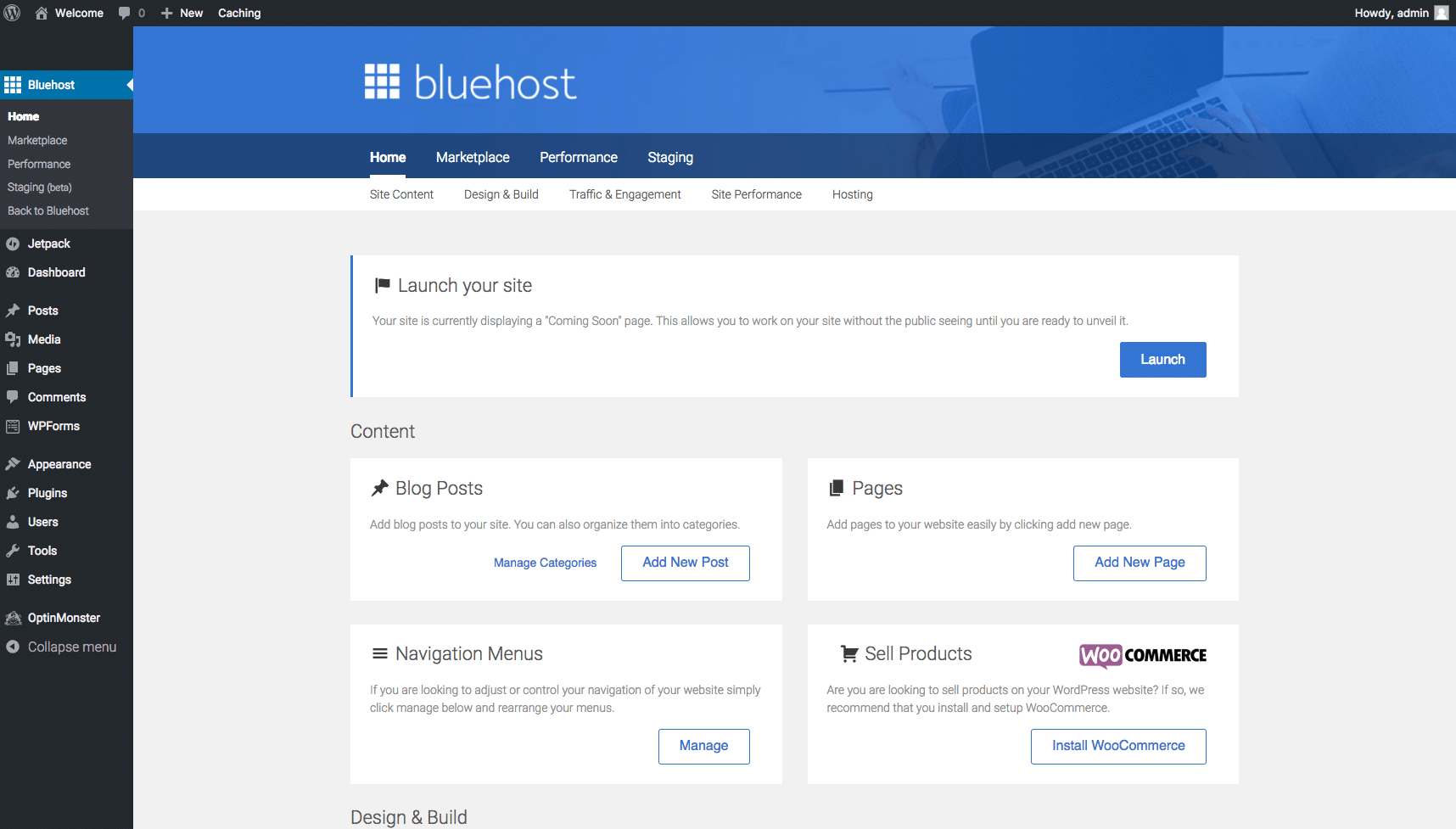
BlueHost

If you are going to set up your own website or a blog, I suggest learning a thing or two about web hosting and select it according to your future needs. The most important things that need to be taken into account before this selection are the average uptime and the average speed. Also, it’s good to know if the hosting is recommended for the type of content management system you are going to use and the type of server that you are going to get for the money paid.

This list will provide you with some of the best choices available at the moment in hosting services. Your entire marketing campaign may depend on your choice in this matter.

A good hosting is important because your business may depend on its reliability and its services. Good services mean that you will not have to worry about page-load speed anymore and this is always a great thing, considering that a lot of people will abandon you if it will take more than two seconds to load your website. In order to understand the relationship between good hosting and bad hosting, consider this: Websites that qualify for the first page in Google search results, have an average page load speed of less than 2000 milliseconds. Opposed to that, sites that made only the tenth page of Google search results have an average page load speed of 2300 milliseconds. Therefore, there’s a mere 300 milliseconds difference between success and failure.

3. Be active

Keep Active

Once you have chosen your main channel and your secondary channels as well, it’s time to create a lucrative strategy for posting and engaging with the audience. A blog needs content, for example, but at the same time, it needs a schedule for that content.

You need to publish with regular frequency so that people will be able to develop the habit to visit your blog regularly.

They also need when to expect your blog posts and what to expect from you in terms of values, ideas, and technical skills.

When it comes to social media, however, the frequency may not be enough. Here, you need to engage with the audience and be an active part of their group. Treat them as your peers and not as someone who is above their social status. It would not heart to join some social media groups as well, especially if you find groups formed by people from the same industry or by people who share interests in what you are offering.

Also, you can create your own groups if you think it may help you.

4. Choose a content distribution network (CDN)
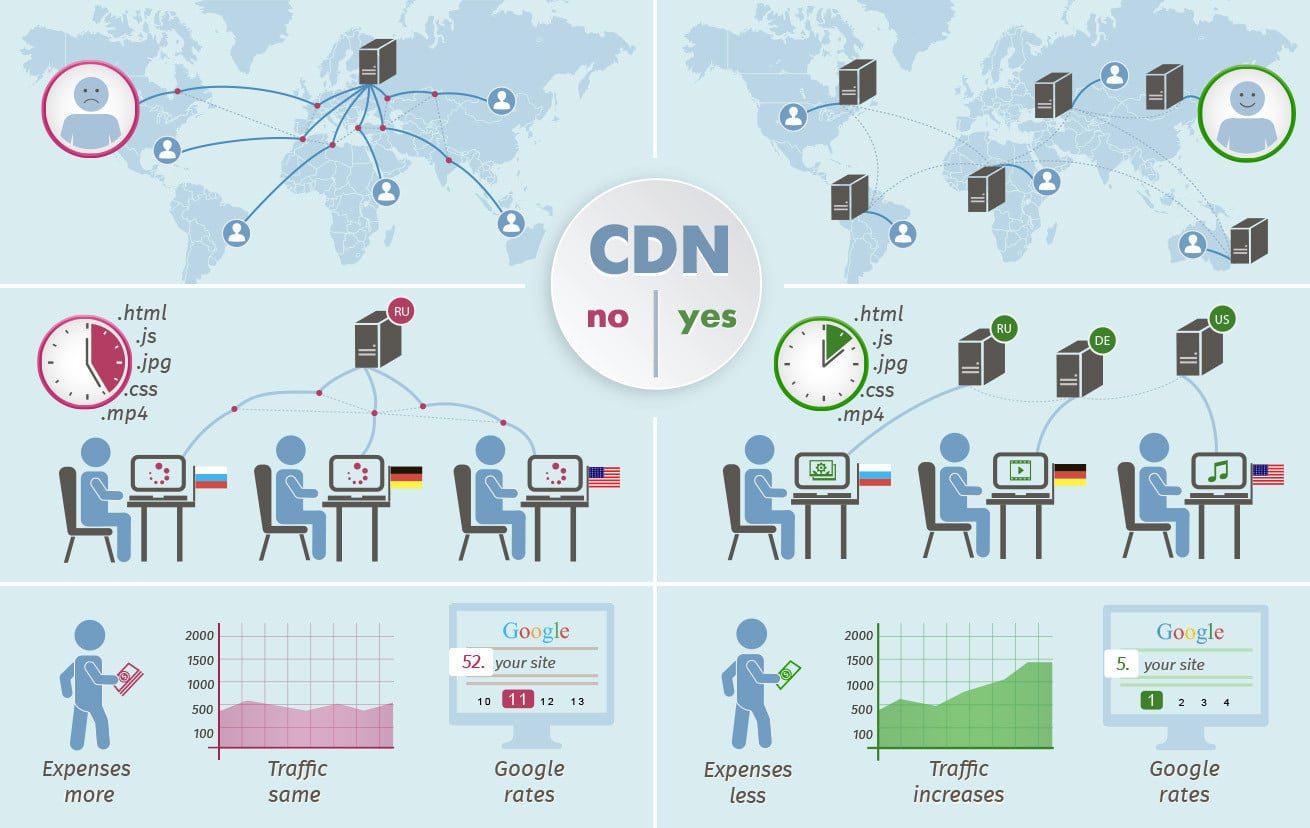
Photo Credit: Orpical

Before going further, let’s understand the difference between the content distribution network and the distribution channel, the main idea we’ve discussed in the previous chapter. A blog is, for instance, a distribution channel. A CDN, on the other hand, is what makes your blog more accessible to a larger audience by localizing its files and databases. What does this mean?

The content distribution network acts somehow similar to a caching plugin but with better applicability and more efficiency. Cloudflare is what Just Creative uses.

Basically, it provides you with a group of servers distributed geographically that cache your content and allows you to deliver it as local content to people from all around the world. These servers work together and provide your audience with the best experience in terms of speed. Considering that the loading speed of a webpage is an important factor in user experience and search engine ranking, you should at least think about this option if you are marketing an international business.

5. Republish content on dedicated channels

If you are doing the best you can and use your time to better yourself with every new piece of content you publish, there are good reasons for you to believe in the effectiveness of your content marketing campaigns. Content is king but only if you deliver to your audience valuable pieces.

Sometimes, however, regardless of the value, you might consider that there is room left for more. This is where you can broaden your horizons and try new types of content delivery. Make a short list of your best pieces and consider republishing them on third party hubs such as Medium and LinkedIn.

They will not provide you with valuable backlinks but instead, with access to new audiences and of course, the chance to build up your influence and your personal brand.

Here is an example on how to use a video and an article in the same context.

6. Use plenty of visuals
B2c Content Priorities

Photo credit: Content Marketing Institute

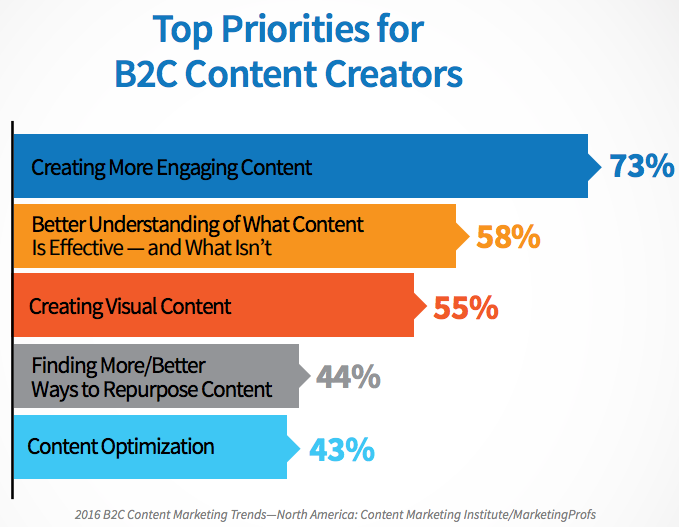
Visuals are an important part of any content marketing strategy. They get to be shared on social media three times more than any other type of content. This means you get more exposure, more effective content distribution and of course, increased exposure to your targeted audiences. Plus, 80 percent of the marketers admit they already use visuals in their strategies, which only proves that they are effective regardless of the industry or business type.

Types of visuals to be used:

  • Stock images and owned photographs. If there are no other visuals that go along with your content, general photos will take care of the visual aspects of it. Also, they’ll help with social media share, by giving substance to an otherwise easy to ignore the textual message.
  • Screenshots, charts, and graphs. They are great for educational purposes, and of course, as visual aids to your texts.
  • Infographics. They’re great for condensing a lot of information into a single visual element. They are easy to understand and read and if designed properly, they are more appealing to the general audience than text. Tools like PickToChart and Infogr.am will allow you to speed up the creative process and get the most out of your skills and ideas.
  • Digital banners. They are usually associated with advertising but you can also use them effectively to compliment your social media posts. Tools like Bannersnack will help you design them with ease and professionalism.
  • Videos. This is a very popular form of content nowadays. Video creation is not easy and it will take a lot of effort at least at the beginning, not to mention the expensive hardware you’ll need to acquire for video capture and video editing. It may be worth it, considering that 73% of Americans use YouTube for entertainment.

7. Always respond to requests and answer your audience’s questions

Coffee & Coffee

Content distribution is seldom a one way street. Your best pieces will get reshared on social media and cited on other articles bringing you more and more fans and customers. However, there will also be an interaction. Blog posts get comments, citation and also trigger some comments on third party websites. The same rule applies to social media posts and shares.

Also, people from your audience or potential customers will ask you questions regarding your content and/or your services.

It is vital here to acknowledge the importance of dialogue and the benefits of interacting with the audience. Moreover, you can also engage with them on websites like Quora, which is intended for this type of content distribution. All the above will help you build a reputation and become more trusted in your field. This may also attract traffic on your main website or blog.

8. Work with influencers

Influencer

Working with people who have an influence in your field or among your targeted audience can bring a lot of benefits. They are usually people that are trusted by their peers and fans, people who are capable of boosting your online presence by simply sharing one of your links or mentioning your brand on social media.

Buzzsumo, for example, is a great app to check out some of the most popular keywords in your industry and calculate their importance on account of shares and overall social media fuzz created around them. You can find out also who can qualify as an influencer in your market and contact them for future engagement.

Another great way in which you can use the power of social media influence is by hiring and working with a brand ambassador.

9. Guest post on other relevant websites
Guest Post

Content is powerful and it will help you a lot in your marketing strategy but sometimes, you will want to explore other distribution channels than your regular ones. One of the best sources for valuable backlinks and industry influence and awareness is guest posting.

Guest posting refers to content published on other blogs and it is quite easy to find relevant ones with a simple Google search for keywords such as: “guest post”, “guest author”.

What’s great about this strategy is that once your articles are accepted by another website, you get to share them with a whole new audience. This is an audience that otherwise would have been harder to target without investing in advertising. Moreover, most of the webmasters will allow you at least one link back to your own website and a full author description.

10. Paid distribution
Paid Distribution

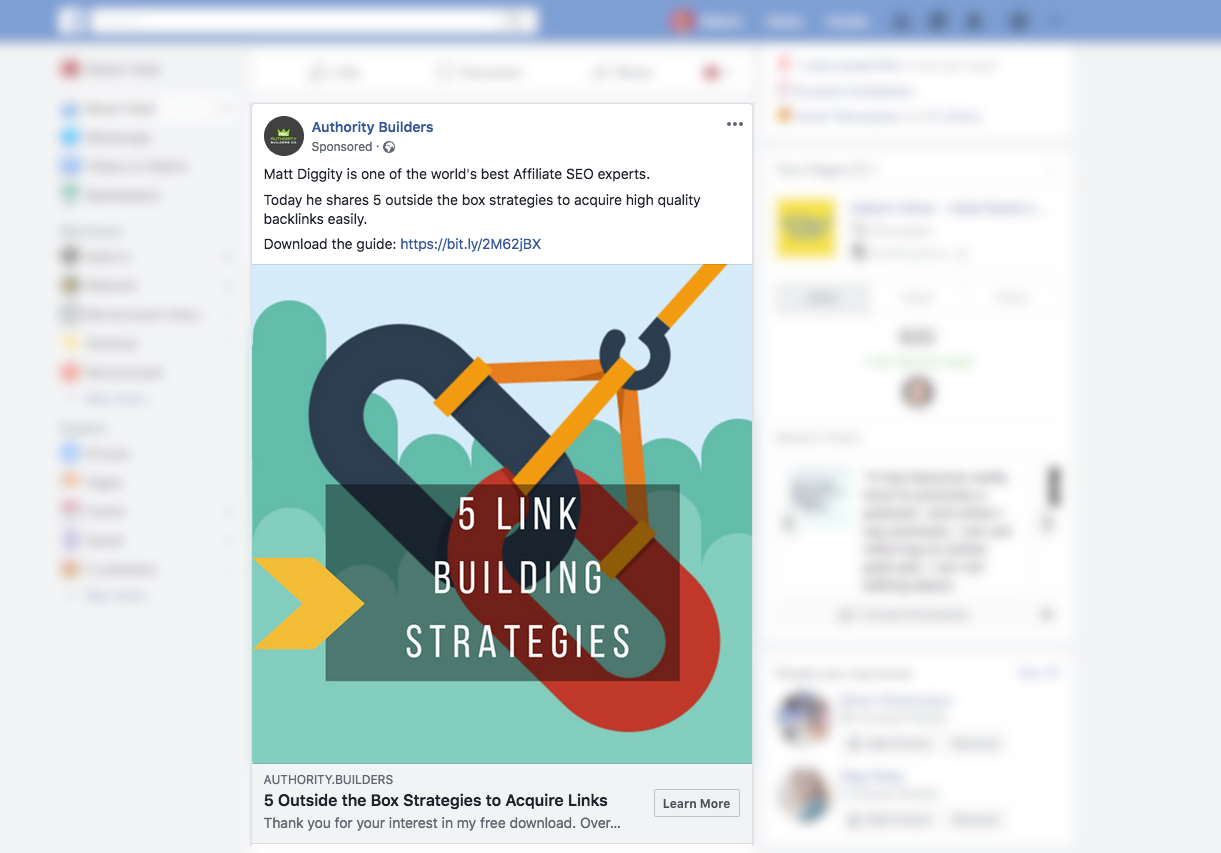
If you are not satisfied with all the free options in content distribution, there’s always the paid option available, if you have a budget for it.

There are three main options here:

  • You can pay for banner or search advertising,
  • pay for social media boost posts or
  • pay for native advertising, also known as branded content.

The latter option, the native advertising, is one of the most effective since you, as a company, invest not only money but also time and creativity in delivering to the audience valuable or entertaining content. Plus, a lot of people, approximately 70% say they are more likely to read about the products they use. Instead of the traditional banner ad with a slogan and a CTA, branded content comes is most of the times informative and engaging.
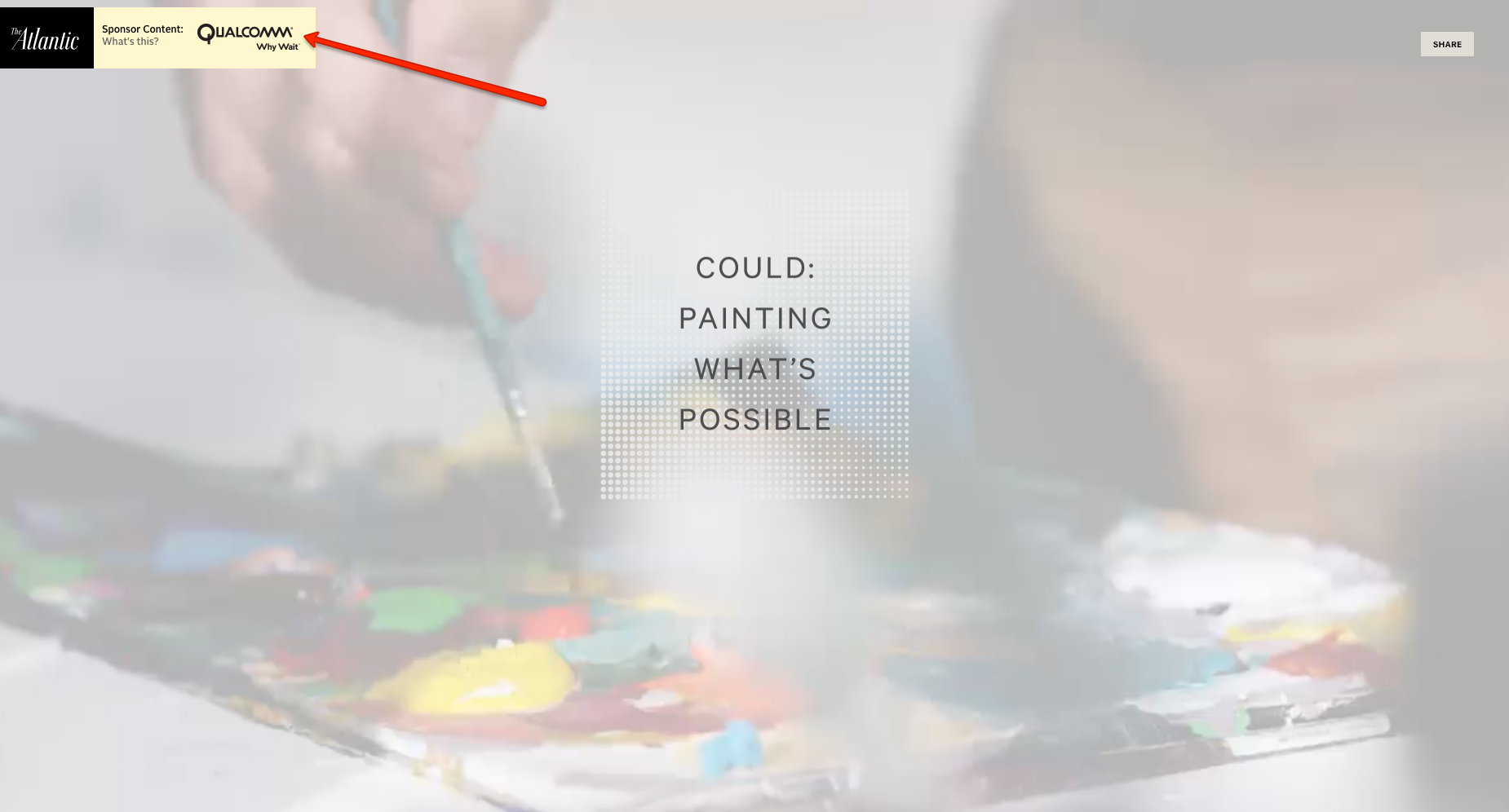
Sponsored Content

A great example, in this case, comes from Qualcomm, a company that produces wireless technology. Their approach to native advertising was a campaign in “The Atlantic” that featured long form articles, videos, exhibits and artwork focused on technology and innovations.

Conclusion

Content is everywhere. From the smallest business to the world renowned corporation, from the personal blog to the news portal, everyone produces content. It helps us create connections, share our thoughts and values, spread word on our brands and sell our products and services to all the corners of the world.

However, the effectiveness of a content based marketing campaign depends mostly on the distribution. It’s good to know to whom we are addressing our message, how to address these messages but most of all, which channels to use for best delivery.

This article focused on some of the most effective strategies for content distribution, strategies that are recommended regardless of industry, audience or type of business.

Which content distribution strategies were the most effective for you? Are there any other tactics you want to share with us?

Sunday, 21 April 2019

[Freebie] 18 Logo Templates & 40+ Elements (Ribbons, Badges, Ornaments)

Logo template packs are a great way to deconstruct logos and learn from the experience, especially for beginners.

This elegant pack of logo assets from Vexels can be used to create your own logos, in a modern hipster style. Simply update the type and graphics.

Please note, I don’t recommend using these exact logos for actual client work (every logo should be unique!). These are provided so you can get inspiration from the style and layout and then make it your own. The ornaments and badges are also handy time-savers.

This logo asset pack features curled rounded lines and a beautiful color palette which can easily be edited. This free logo asset pack contains 18 finished logos with text and symbols and 40+ elements such as ribbons, badges, ornaments and many more that will make your designing as easy as it can get.

Download Free Logo Asset Pack (7mb)


Download Logo Branding Asset Pack Free Hipster Style

Fonts Used in the Logo Template Pack

We can’t bundle the fonts used in the pack due to licensing, but the fonts are all available for free download here:

Download Free Logo Asset Pack (7mb)


JUST Creative’s Top Posts of 2019 Thus Far

Here is a summary of the top posts on Just Creative from 2019 thus far.

Top 10 (based on traffic)

  1. Best Laptops for Designers
  2. Logo Design & Branding Trends 2019
  3. Graphic Design Trends 2019
  4. Best In-Ear Headphones for Music-Lovers
  5. Top 15 Font Combinations for 2019
  6. Design Conferences 2019: The Ultimate List
  7. 101+ Best Logo Design Resources
  8. 10 Best Serif Fonts for Clean & Elegant Logo Design
  9. Top 100 Courses to Take on Udemy in 2019
  10. Logo Design Process for Outdoor Fashion Brand

Typography

Courses & Learning

Graphic Design

Logo Design & Branding

Best Hardware for Designers

Marketing & Blogging

Other

What’s your favorite and what you like to see more of?

Tuesday, 16 April 2019

The Creative Differences Between an Office and a Coworking Space

This article was contributed by Kim Burmester, the Vice President of Sales & Marketing for ATLAS Workbase, a coworking and shared office space in Seattle.

Do you ever feel like those cubicle walls surrounding you are more than just a physical barrier?

Do you ever think that if you were to get rid of them you’d feel a lot more free?

Those walls act as much more than just separation from you and your coworkers, they can be mental blockers as well.

I can speak from personal experience when I say that a coworking space fuels creativity and collaboration, while a dull old office full of cubicles simply contains everyone’s individual thoughts and feelings to themselves.

Blocked: Literally and Figuratively

Boxed Cubicles

When you’re cooped up all day in a little box of a cubicle staring at another little box of a computer, the juices can stop flowing quite quickly. With nothing in sight but those incessantly grey walls and no way out, I often found myself at a loss for words, a loss of motivation, and even sometimes a loss of happiness due to the environment I worked in.

An office seemed to me to be designed around one thing, productivity, but that productivity is individual productivity, siphoned and sectioned off to be bits and pieces of the puzzle being completed separate of each other.

In a coworking space, you can collaborate with your coworkers using comfortable meeting spaces, incredible technologies, and you can often enjoy a snack while you’re at it too.

This is why I believe coworking spaces to be superior to your everyday office, because they truly provide an environment that condones, rewards, and respects productivity and collaboration, even if it’s outside of your own company.

What Is A Coworking Space?

Coworking Space

Briefly, I want to touch on what a coworking space is, for anyone who may not be familiar with this incredible way to work. Coworking spaces are usually open offices with lots of comfortable furniture, brand-new technologies, and many hungry go-getters chasing their dreams.

The true difference that lies between an office and a coworking space is the ownership, as often times a company will buy or lease an office for their employees to work out of, but with a coworking space, the entirety of the space is shared between whomever is a member of the space.

No one has designated areas, no one has to stay in one spot for 8 hours, no one has to hear some loud phone call or meeting going on in the next room, and most importantly, no one has to work alone. Of course, you CAN do that, if you’d like!

Collaboration is Key: The Biggest Benefit to Coworking

Coworking Space Bangkok

While it’s obvious that working together with people within your company will be easier when there aren’t literal physical barriers in the way, the collaborative effort I am referring to here is something just a little different than that.

As I’ve said before, a coworking space is often filled to the brim with hungry go-getters that have just started a business, just joined a business, or are looking for people who have just started businesses as mentees or partners. This should immediately put the idea into your mind that cross-business collaboration is key.

Having other driven individuals around you at almost all times throughout your work day does wonders for motivation, but even more so it can provide connections that you absolutely would not have working in a one-company office.

Think about what your company does.

Think about all the third parties involved, any outsourcing, all the scrambling done for connections to successful people, and then take a mental step back.

Now, imagine your company in a coworking space. Say you need a logo designed for your client, but you don’t do graphic design. Coming out of the kitchen is another member of the coworking space who works for another company as their graphic designer, and you ask if you could get a draft of a logo for a client. Simple as that.

No more searching all around for the right people to do the right things for you, because chances are they’re right there in the room with you, and if not, someone in that room knows someone you should get in contact with.

That is the beauty of the coworking space. Connections. Collaboration. Creativity.

It all goes hand in hand, as when you have more opportunity and more space, you do more with it. But what makes the difference in creativity between a regular old office and a fancy new coworking space? I’ll tell you.

The Creativity Factor – What Makes Coworking Spaces Better

CoWorking Space

Creativity has always been one of the most abstract and obscure concepts to me, as it can manifest itself in an infinite number of ways. In the same sense, creativity can be blocked in an infinite number of ways that seem just as indecipherable. So what are the ways to get creative, you ask? How does one jumpstart their creativity engine and begin roaring down the highway of productivity?

First, you must relieve yourself of all barriers, both mental and physical. As someone who enjoys writing, not just for business purposes, I often try to take the time to write creatively if I can. My experience doing so in an office, all while trying to avoid real work, proved to me why offices are not creative spaces. If all I can see when I look around is cubicle walls, I will not be creative. What I write will be terrible, uninspired, disconnected nonsense coming from trying to force something on to the page.

Instead, if I can look away from my computer to see outside the windows at a sunny California day or a gloomy Seattle afternoon, or if I can look up to talk to one of my fellow coworkers, or even just stare 100 feet off into the distance as I think about what’s going on in my mind and what I want to write, the creative juices begin to flow.

I am reminded of authors like Hawthorne and Hemingway when I think about this creative process, as these legends often wrote their best works when they were able to look up from their pages, see the world from a window, and contemplate what it means to them. The same goes for creativity in business and coworking because there is no perfect fix, there is no perfect jumpstart, but the right environment can produce unbelievably positive results.

My Experience in An Office Versus a Coworking Space

Meeting Room

To pit my own personal experiences against one another, I know for a fact that my writing improved in both quality and quantity once I started working in a coworking space.

The energy, the environment, the other people, and of course, the food, all propelled me into a heightened state of creativity where everything I looked at brought with it new ideas. I went from churning out maybe one creative piece a week to 3-5 in a week, and they were all better than the last.

Now, the counterargument can be made that any simple change of environment will revitalize the mind and body and start the creative process anew, and while I agree with that, I do not believe that any simple change of location will have you writing your best works right off the bat.

The reason a coworking space is one of these special locations that instills and inspires creativity is because of the people around you: the motivated, driven individuals who are working hard every day to get their businesses up and running.

When I see that, I feel inspiration. I see new opportunities I didn’t before, I gain confidence in myself and in my work and I begin to flourish in a new way that a closed-up office space never provided for me. Working with and around others who love what they do and are passionate about making positive changes in their field is the true way to spark creativity, and it’s pretty much foolproof.

If you don’t believe me, I encourage you to try it for yourself. Don’t go to your local coffee shop, don’t go sit in the library, and definitely don’t just lock yourself in your room alone trying to force content out of yourself, because that will only make matters worse.

Go to your local coworking space, ask if they do a free one day pass or trial of any kind, and go experience what it is that I am describing to you. The energy in the room. It doesn’t feel like any normal office, where everyone’s patiently waiting around and counting down the seconds until 5 PM.

That’s because every single person in those rooms wants to be there, because they are excited about what they do, and they see the impacts it makes with their clients, with themselves, or both. People leave when they want, arrive when they want, work where they want and next to who they want to, and all of these pieces come together in extraordinary fashion.

Why This Creative Difference Matters

Coworking Space

In summation, it is tough to see the benefits of working in these outdated and overused office spaces when there are options such as the coworking space that will inspire and drive you to work harder, smarter, and better than you have where you are now. It is also tough to see the benefits of a coworking space when you have been stuck in the ways of the office space for your entire working life, and that is precisely why I highly recommend checking out a local coworking space near you.

Nothing will explain it like being there to witness it.

The world of startups and the internet has coworking spaces all over the world hustling and bustling back and forth as driven businesswomen and businessmen chase their dreams, inspiring many who look on to do the same. I have been lucky to be a part of a coworking space for many years now that has kept me inspired and led me to do some inspiring as well, which feels just as good if not better.

What I see as the main difference between offices and coworking spaces is the emphasis. Offices emphasize individuals, working alone, completing tasks individual of one another and then bringing each other finished products. Coworking spaces instead offer collaboration, openness, constructive criticism, inspiration, and much more all from the people around you that allow for much more success.

Creativity flows in coworking spaces, as pretty much everyone you work with or around will be brimming with new ideas to get businesses to flourish, and that is the stark creative difference between offices and coworking spaces.

In an office, creativity gets cut off by cubicle walls, stopping right where it started. Without those restrictions, creativity flows from person to person like the powerful energy that it is, taking hold of everyone uniquely and revitalizing their passion in a bright and positive way.

If you are having problems getting into a creative zone and staying there, or are struggling with creative ideas in any fashion, I can assure you that a coworking space will open up a part of your brain you probably haven’t felt in a while, especially if you’ve been working in an office for too long.

Co-Working Spaces Spark Energy & Creativity

Large CoWorking Space

There truly is nothing like the energy you will find in a coworking space, and the connections you can make with the people there will allow for even more success than just the creativity spark coming back. That is just the beginning. Shifting your mind by shifting your location to a site teeming with a lively creative energy can’t possibly go wrong, and even if it can it’s worth a shot.

I know from personal experience, as do many of you, that offices are not meant to be wondrous, bright, creative and energetic places, but that is exactly how I would describe a coworking space. I have been able to more fully realize half-fulfilled ideas or plans, I have been able to connect with people whom I would’ve never had the opportunity to meet, and I have been able to be more creative and be rewarded more for that than ever before, all thanks to working in a coworking space.

What’s your experience like with coworking spaces vs an office? Tempted to go in to one after this? Let us know your thoughts!

The Best Times for Sending Email Revealed

In this article, the team at AtomPark Software, will share with you their analysis of the expert opinions, existing examples, and tools that will help you to define the perfect day and time of sending email campaigns.

Time is money, especially in email marketing. Are you sure you don’t waste yours?

We don’t.

At AtomPark Software, we don’t only develop mass email marketing solutions but also send newsletters to our subscribers, so the problem of mailing time is highly important for us too.

That’s why we’ve put together this guide to “the best time for sending email newsletters”. In this article, we will share with you our analysis of expert opinions, existing examples, and tools that will help you to define the best day and time for sending your email campaigns.

What influences the time of sending bulk emails?

The most important aspect in sending a newsletter is whether the message will be noticed and opened or not. This is a crucial factor for the other metrics and the success of the campaign — will your efforts be in vain or not?

There are several factors that influence the choice of the optimal time of mass mailing. You should consider them when scheduling the time of your email campaigns:

  • the geographical position of your subscribers,
  • their culture timing specific (eg. work days & hours)
  • online behavior,
  • the specifics of your business.

According to the chronological principle of mailbox sorting, your newsletter will be on the top of the inbox or on the bottom — a place in the top increases the chances of the newsletter being opened by the recipient. The lower your newsletter in the inbox list — the greater its chances of being lost.

When to start a bulk email campaign: Follow the sun tactics

Do you have a super system that automatically sends emails based on the user’s online activity? We don’t.

That’s why we choose the “following the sun tactics”.

This means that the basis for the countdown of mass mailing should be the time when the sun rises in its geographic location.

Time and Date

It is important if your email list has IP addresses of people from different countries and time zones.

Following the sun tactics hack


The majority of marketers choose to launch email campaigns’ in the minutes of the hour  _:00 and such times as __: 30 or __: 45.

Sending your emails on these hours, you risk your emails being postponed because of the workload on Internet providers.

The best variant is to send in the quiet minutes, such as:

What time to choose: stand out or go the trodden path?

How great it would be to remove all the guesswork and get the exact answer!

After analyzing popular studies, we have defined the top moments to start mass mailing your campaigns:

TIME WHY
6:00 — 9:00 am
relaxed morning Breakfast, the way to the job — free minutes to check the mail
10:00 am — 12:00 pm
people have coped with the preparation for the working day and are ready to read your emails
02:00 — 03:00 pm
coming back from lunch, the first thing people are probably going to do is to check their email
08:00 — 10:00 pm nothing distracts a person to read your email
during the night
the lowest rate of competition among senders, the person will wake up and immediately see your email

Among the majority of marketers, the most appropriate variants are the second and the third. Let’s define the reasons why.

In fact, the choice boils down to:

  1. Send emails during peak hours, when the majority do
    • advantages — people are ready to perceive information from emails
    • disadvantages — high competition rate, a newsletter has fewer chances of being open and read.
  2. Send at a time when no one does
    • advantages — more chances that your email will be noticed and read
    • disadvantages — most often, people are sleeping or busy at this time

The best time to send emails out according to Newsletter Stats

The goal of your campaign is highly important in the process of choosing the best email sending time.

Here is the list of the most popular email newsletter goals:

  • Open Rate
  • Click Rate
  • Response

If your goal is high open rate the best time to send is 10:0011:00 am:

Remember about the quiet minutes.

  • A recent MailChimp study found that the optimal email send time is 10 am:

  • HubSpot’s variant (based on Open Rate indicator) — 11 am:

But it differs on Sunday:

  • Otherwise, the research of MailerMailer finds out that the best time for a high Open Rate is 12:00 am, and the worst is at 12 pm:

The best time to get a high Click Rate is in the evening:

This is because people are not in a hurry and can take more time for their mailbox.

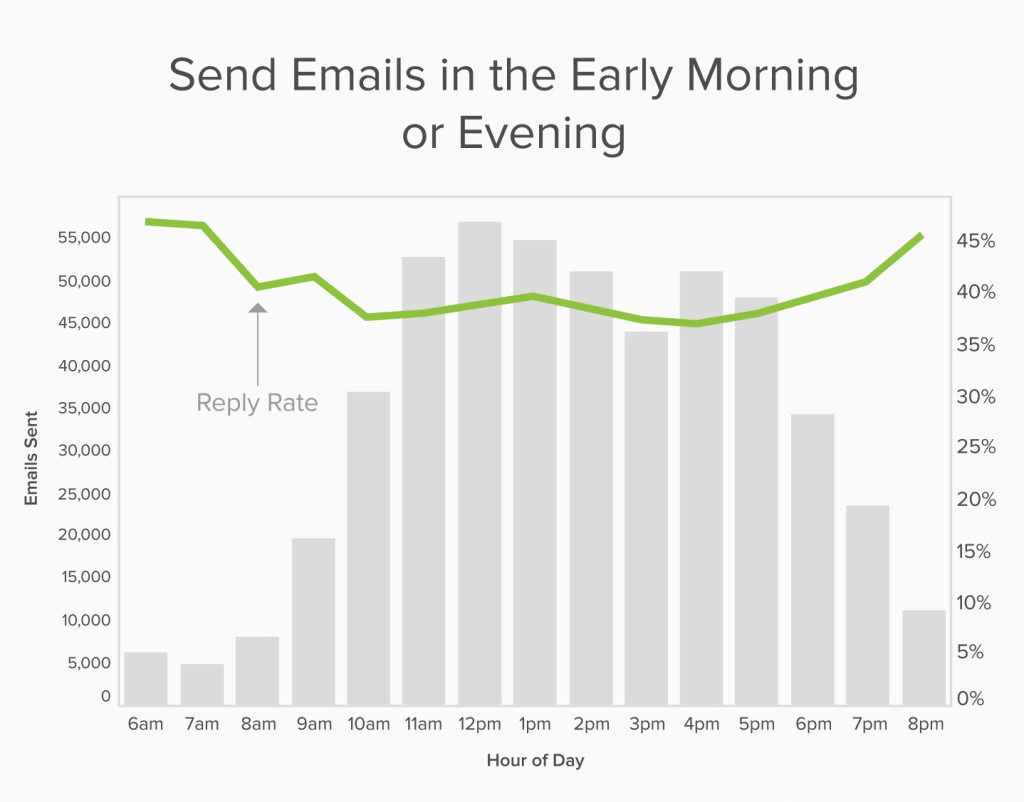
According to Yesware’s analysis if you want to get a response from the person, it’s better to send an email campaign in the early morning or evening:

What day is the best for sending emails?

So, we figured out the perfect sending time, what about the perfect day?

Let’s start with what day is the most popular for sending newsletters among marketers.

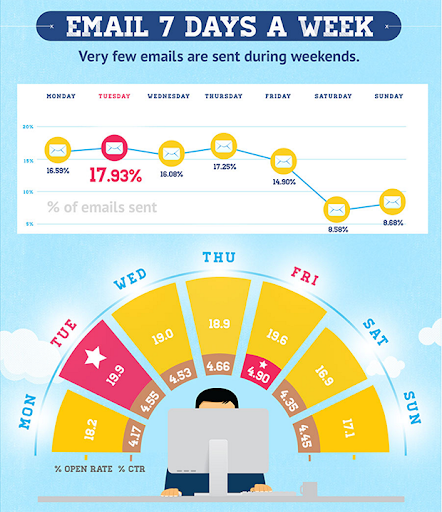
This GetResponse survey says that the top sending day among email marketers is Tuesday and Thursday.

What does it mean for you?

  1. On these days, people are most likely to read emails. Therefore, the chances of a positive perception of your offer increase.
  2. However, it also means that in the subscriber’s mailbox apart to your newsletter, there will be 50-100 other emails. So, there is a high risk that your message will go unnoticed.

Thus, there are two options: either you send campaigns along with everyone, risking to get lost in the mailbox, or go against the rules and send on less popular days.

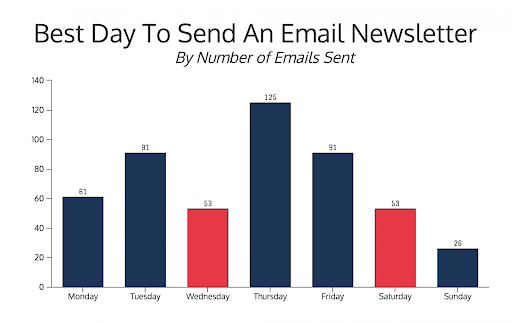
If you choose the second way (to go against the “email crowd”), these are results of a rebill.me survey. The colorful one is the “calm days”, most appropriate for email sending:

If you prefer to follow a proven path, here is a table that will help you to navigate choosing the best mass mailing day in accordance with your primary goal:

THE GOAL THE BEST DAY WHY
Opens Tuesday, Wednesday, Friday
on these days people have cleared the inbox and have a lighter load
Clicks Thursday and Friday
there is more time to read your emails so people also have more time to take action when they feel compelled by your offer
Responses Weekends in the mid-morning
because there’s significantly less email being sent on weekends.
The worst day is considered to be Monday because of the large inflow of messages in the mailbox after the weekend + stress of the first working day of the week.

However, there are always exceptions to the rule.

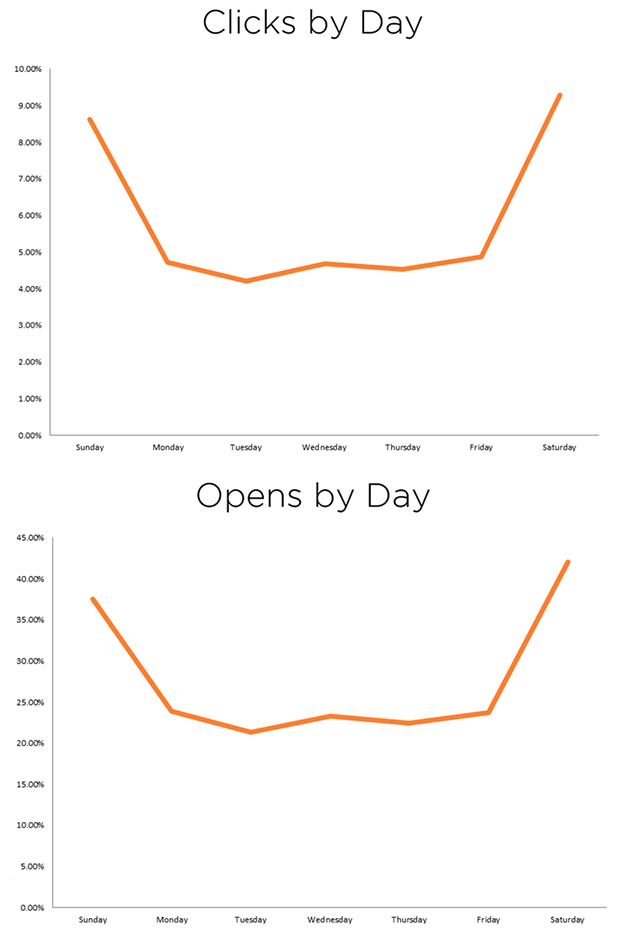
For example, Dan Zarella’s research “The Science of Marketing” shows that the perfect days to get high Click & Open Rates are weekends.

Let’s summarize the results

  • Want your email to be opened — send during daytime, mid-week.
  • Want to get an answer — send in the evening on weekends.
  • Want clicks — send in the evening at the end of the work week — Thursday, Friday.

Follow/go against the general tactics or find the time that will work best exactly for your business.

Real life examples of Email Time scheduling strategies

If you don’t want to rely on the stats — read these cases of how e-commerce brands found their perfect sending time:

  • The Carney Digital Agency sends promotional emails between 8 pm – 10 pm or at 7 am.
    Why: As a result of the A/B testing and survey “When would you prefer to get emails?”.
  • Jumpanzee Web-Design Agency found that 10am1pm emails work the best.
    Why: This time was chosen as the best based on the users’ activity in the previous email campaigns (open rate/click rate/etc.).
  • HealthJoy.com — the All-in-One Health Benefits Platform, chosen Tuesday’s morning (10 am) as a common time to send b2b email campaigns.
    Why:
    with the help of A/B tests, they checked the efficiency of the marketing studies results for the health care field. It showed that Tuesday morning campaigns have the best conversions.
  • Campaign Creators Advertising Agency marketing team used to inform their email subscribers on Sunday after 5 pm.
    Why: this time was chosen after testing their blog, promotions email subscriptions.
  • Espresso B2B Marketing Agency relies on the experts’ reports and sends campaigns on Tuesdays, Wednesday or Thursdays.

If you don’t know your audience well enough or don’t have a mailing list to test — there is a good way out:

There isn’t a great difference between the followers of your brand on social networks and the email audience. So why not to analyze the activity time of the first one to implement it for the start of the mass mailing campaigns for the second.

Tools to help you find the best email sending time

Use these instruments to know the moment when your subscribers are the most likely to engage with your brand.

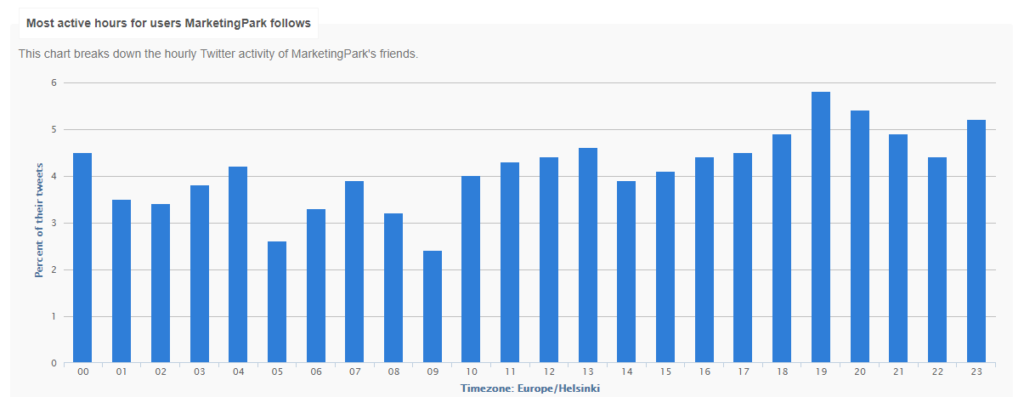
  • Followerwonk tool — Just type your Twitter username in the search bar and find out when your Twitter followers are the most active for free (up to 25,000 followers).

For example, this chart shows that the AtomPark readers are the most active at 7pm:

  • Use Facebook Page Statistics Data — open the “Statistics” tab of your brand account and go to the “Posts”:

As you can see, Facebook says our followers are the most active on Thursday between 4 pm and 7 pm.

Thus, we found that theoretically, Thursday evening could be a good time to test the time of sending mass email campaigns.

Content Marketing Manager at AtomPark Software, company that provides professional mass email marketing solutions, tools for email and SMS marketing. A young voice of marketing progress, obsessed with a creative copywriting, design and experiments with new ideas and trends.